Unfortunately due to the continuing high price of quality western red cedar I will not be making anything other than observation hives for the time being. The extra work and skill involved in making them make them worthwhile. Other than that we’re kind of going into hibernation until all the material price craziness goes away….hopefully things will return to normal and we can resume production but for now please accept our apologies.
|
||||||||||||||||||||||||||||||||
British National BeehivesBased in a small workshop in Tideswell in the Peak District we make Highest Quality British National Beehives out of 1st grade American Western Red Cedar or High Quality Red Deal according to the British Beekeepers Association (BBKA) Modified National Hive Plans. Everything we sell we make here in the Peak District. We also stock other items of Beekeeping Supplies including Frames, Foundation Wax and Hive Tools. The driving forces behind peak-hives.co.uk are sustainability and quality workmanship. Sustainability because, well it matters quite a bit we think and quality workmanship because customer satisfaction is paramount. Cedar Scarcity.Unfortunately building materials are extremely scarce at the moment and pricing is highly volatile. This goes for Western Red Cedar too. I have decided that until the market settles down I will not be making up any Cedar hives or hive parts. We'll be back in operation once the supply issues have been resolved. Many thanks.webcam...Want to see your National Hive being made? Here's what's going on in the workshop right now. The image is updated every 10 minutes during working hours. Click to see full size...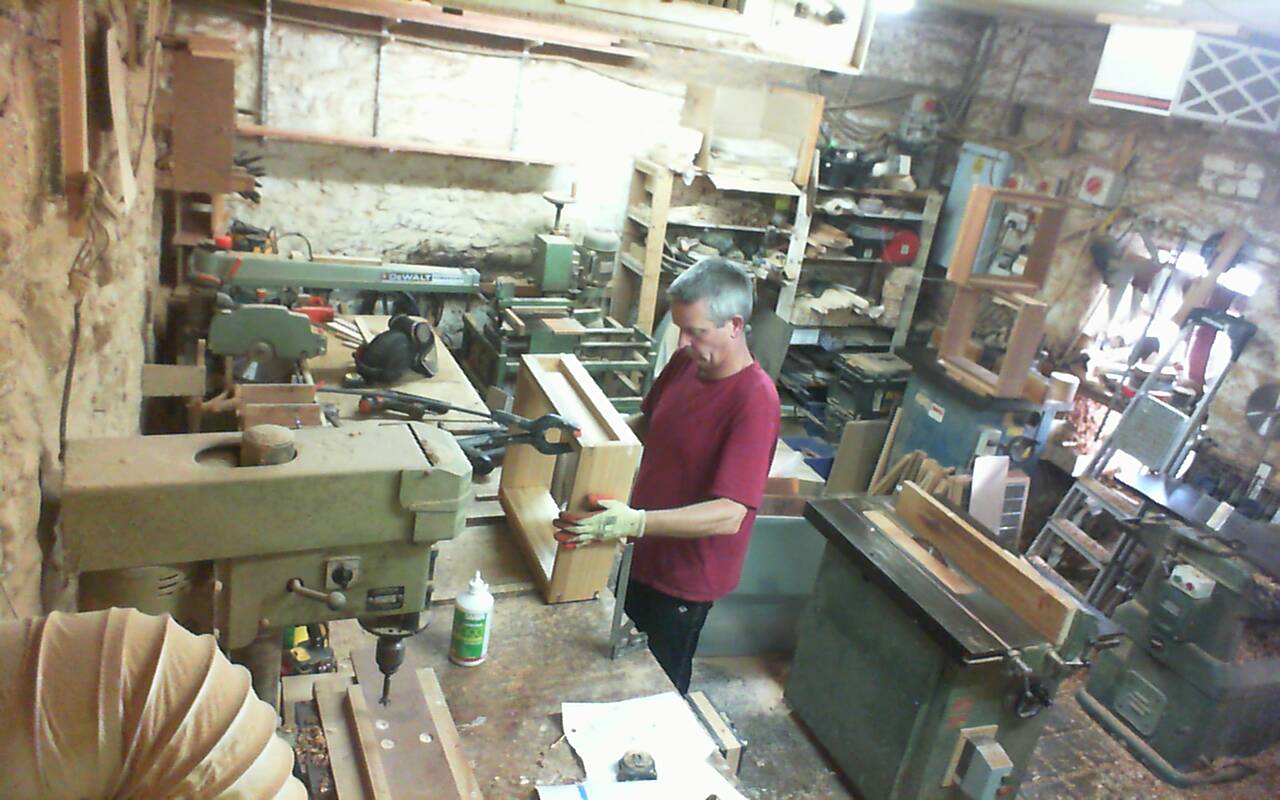 blog...The rest of the centre column is an ongoing blog of what's new at peak-hives.co.uk and other items of interest...veg garden...renewables etc, but please don't let reading about the allotment distract you from placing your order...:-)Just completed for a local beekeeping association for displays at local shows. Both in First Grade Western Red Cedar. One is our standard 6 frame plus dummy board Observation Hive but with an extra brood frame lift. Shown here with the supplied shutters removed. The other hive is a standard National with all round viewing panels so the viewing public can see inside a real National Hive. Also shown without the supplied shutters. Very pleased with them and so was the client. All the best. Nick. 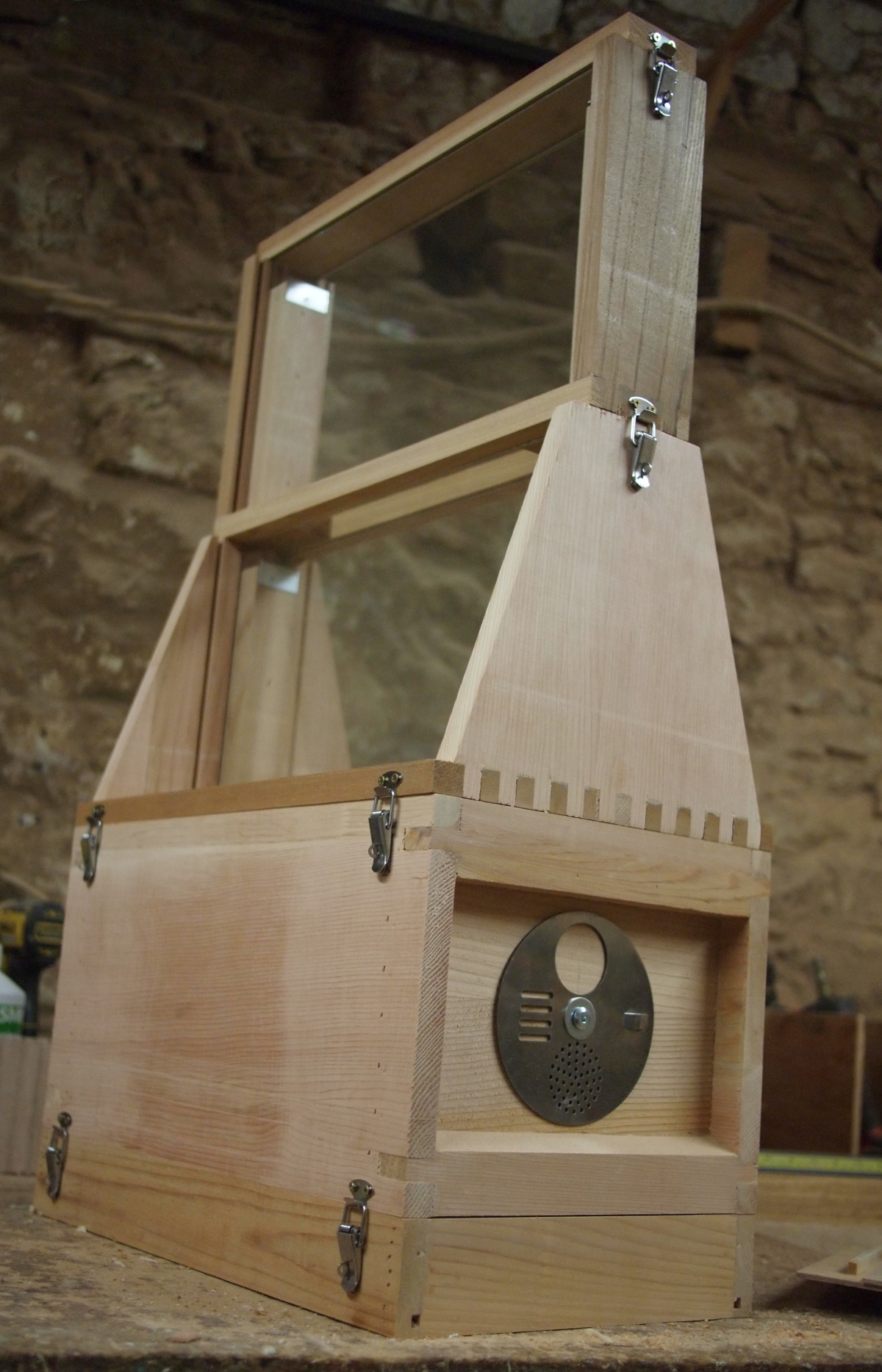  I’ve just added our 6 Frame Observation Hive to our standard products list which can be ordered from the left hand column. In standard it comes in First Grade Western Red Cedar and holds six brood frames (seven if you count the one lifted into the viewing frame). It comes with a dummy board and shutters to block out light when in transit. It has a mesh floor complete with Yellow Correx inspection tray. The entrance is a stainless steel disc which is held in place with an allen bolt so it can be fixed tight for display. Optional is a crown board and roof kit so the hive can be used to house a colony longer term. 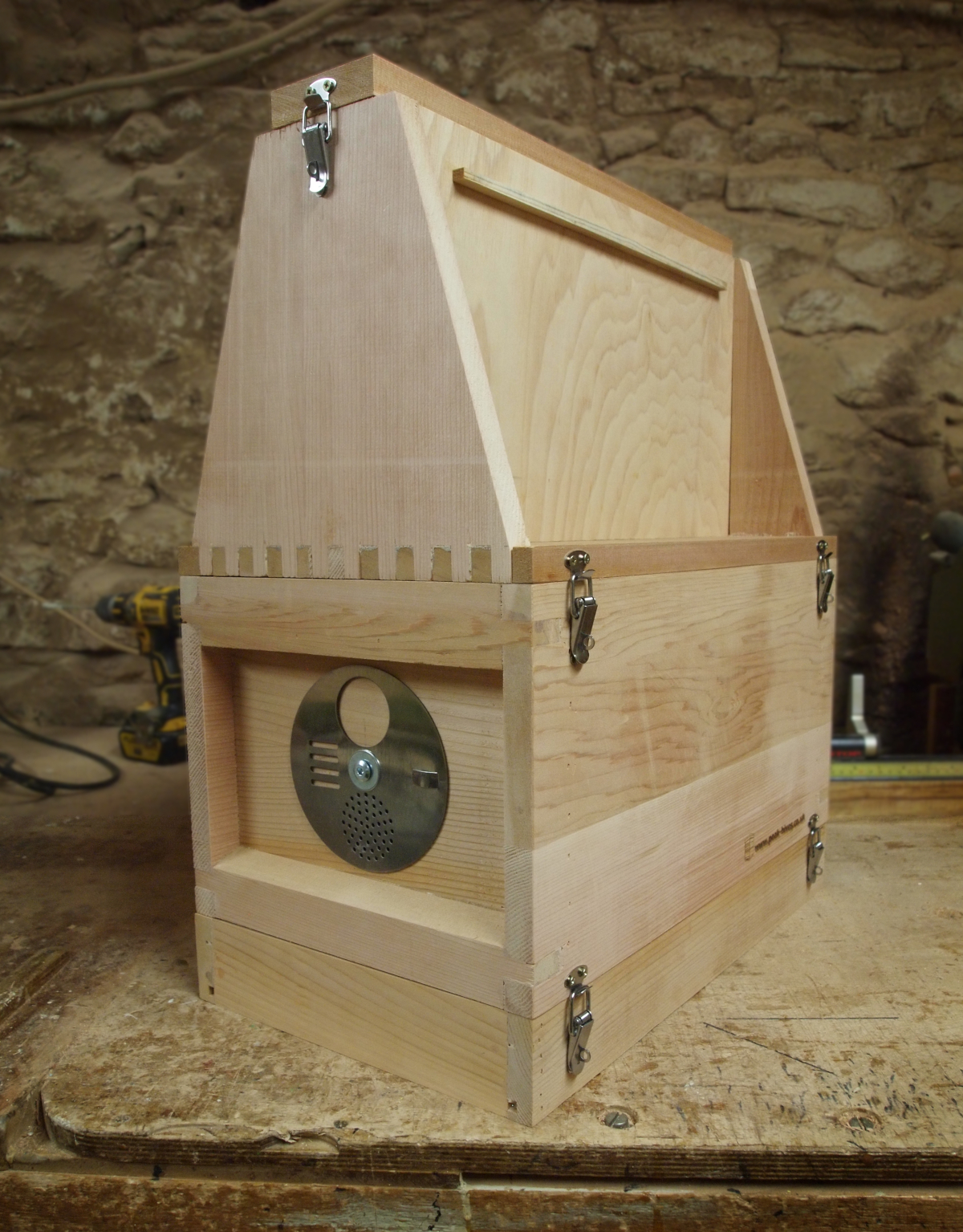 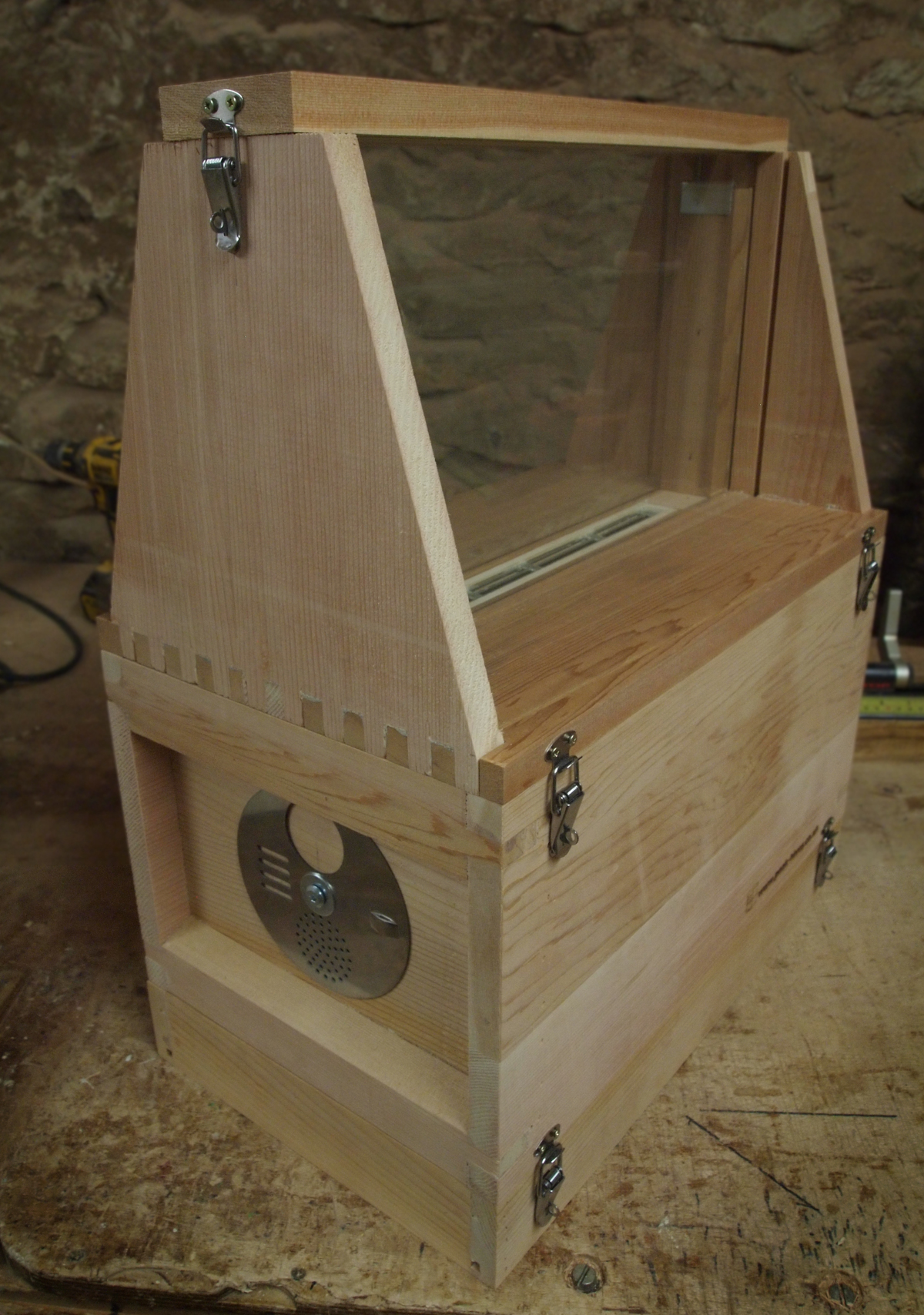 Perfect for Farmer’s Markets and can be laser engraved with your custom logo. Requested by our long standing customer Johan I have just made up a batch of 10 of these ‘Fondant Cosies’. The outer ring is filled with 75mm Kingspan and the centre feed area is designed to take 2.5KG packs of either Fondabee or Ambrosia Fondant. The fondant is laid on top of the super/brood frames and is then covered with a lid filled with 25mm Kingspan. The lid sits on rails that are 50mm up from the base so there’s enough space above the fondant packs for the bees to roam around over the top of the fondant. 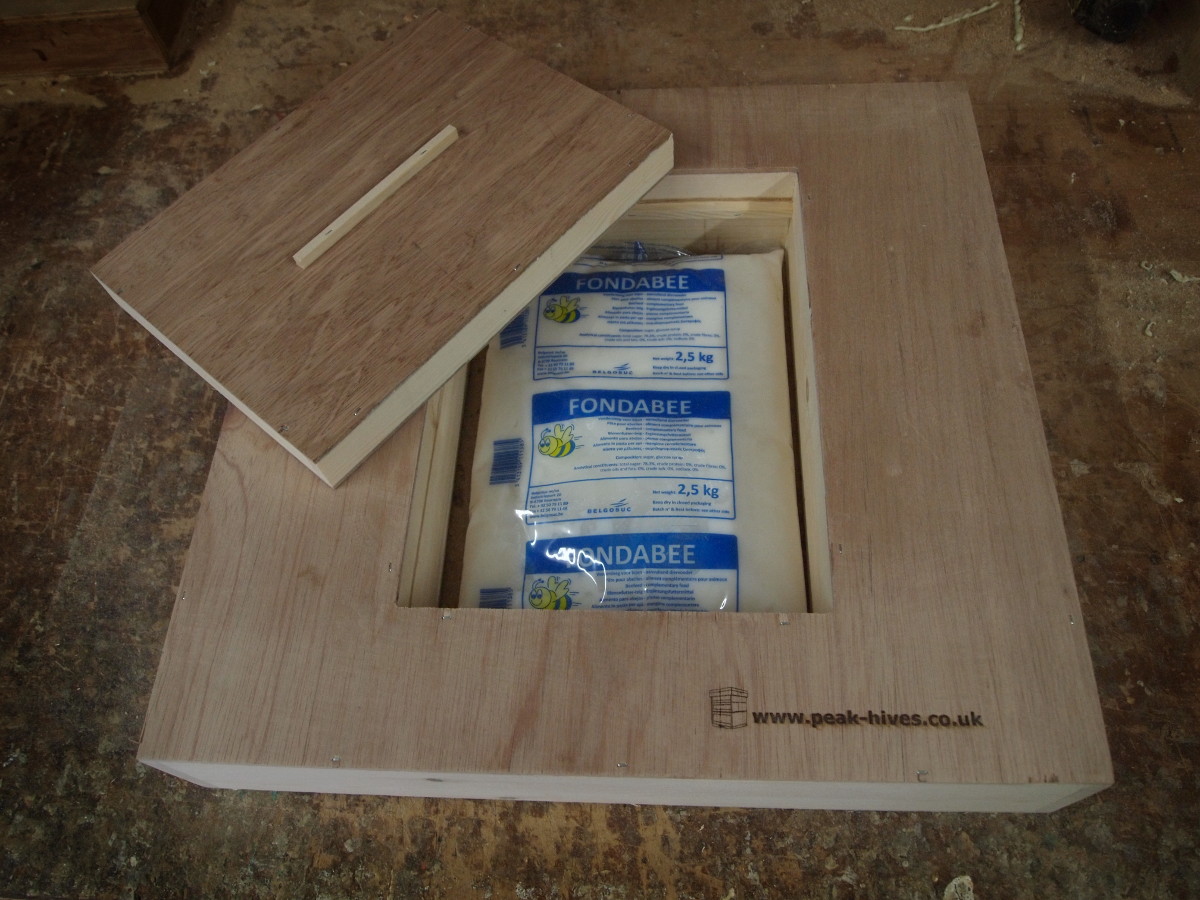  Tested them with 2.5Kg packs of Fondabee and Ambrosia. I’ve just added them to the Peak Hives product range and they can be found in the left hand column.  Daughter Alexandra isn’t mad about bees but she is about horses and wants to fund her equine hobby. So she’s now the official Peak Hives assembled frames maker. We’re now offering assembled DN4, DN1, SN4 and SN1 frames with foundation wax. Standard frames with wired worker foundation. You can find them in the left hand column on the website. Here’s to bees and horses! We’ve been so busy during the Covid lockdown and want to thank all our patient customers awaiting their National Hive products from Peak Hives. Stay safe! We’ve worked with Helen and Ken from Fenland Apiaries for a number of years now and they have over the years provided Peak Hives customers with the most fantastic Nucleus Colonies. Any enquiry we have for Nucs goes straight to Helen. They’ve just launched a new website to promote their honey and honey based products. https://fenlandapiaries.co.uk/ Do visit and purchase. We do live in strange times. The Covid pandemic has affected so many in so many different ways. Here in sleepy Tideswell we’re very lucky to be out in the countryside. Very lucky! For Peak Hives it has caused a huge increase in business. I suppose so many people in lockdown are finding time to increase their bee stocks and enter into the world of beekeeping. So to all customers, many thanks and many many thanks for your patience in understanding that we’re a small business making our own National Hive and beekeeping products in a small rural workshop. Happy beekeeping 2020. And let’s beat Covid! 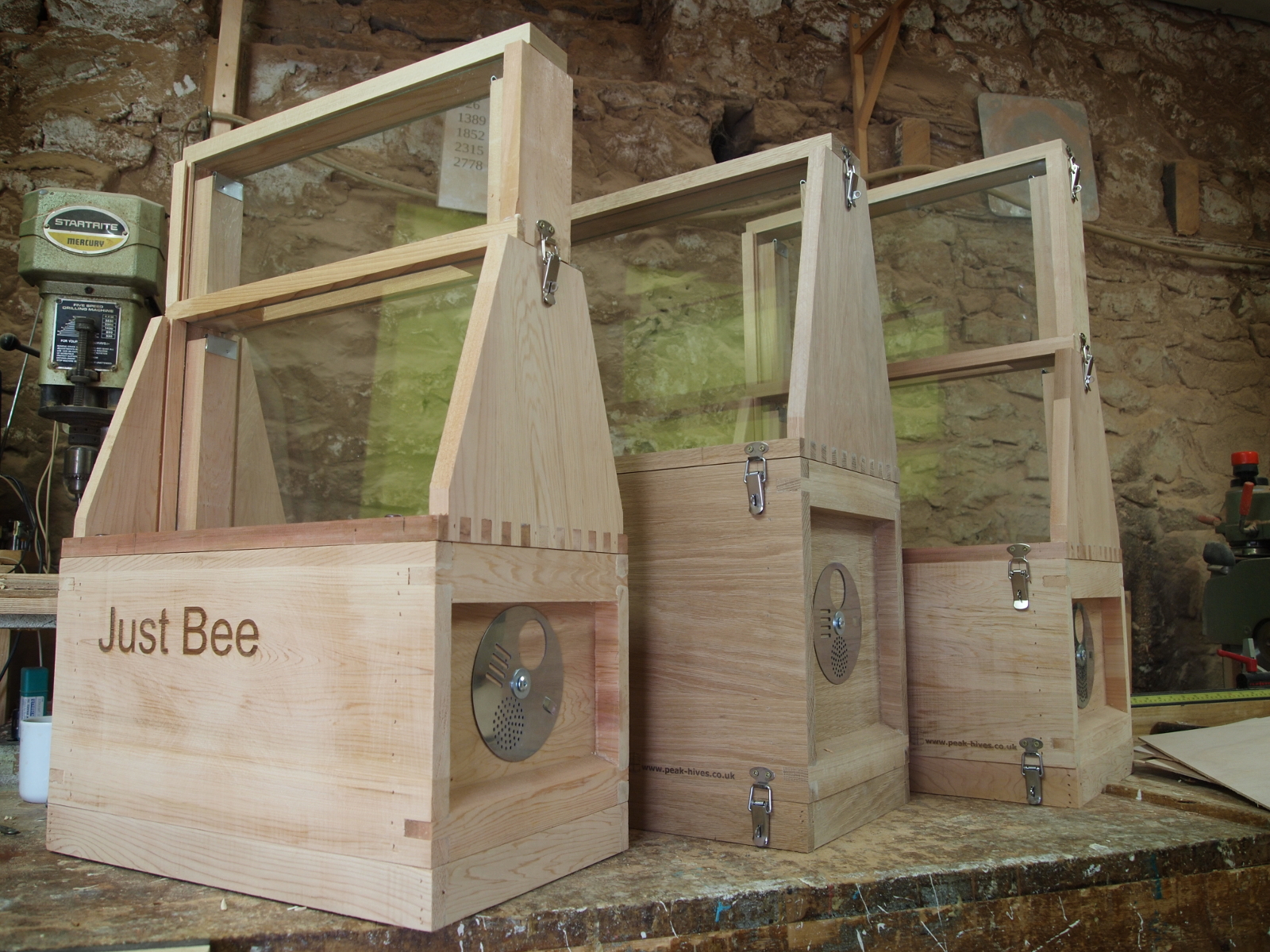 Here’s three National Nucleus size Observation Hives just completed in the Peak Hives workshop. From Left to right, 6 Frame Cedar Standard National Brood with a Brood Lift and a Super Lift on top and a custom laser engraved logo, 6 Frame Oak 14 x 12 Brood Size Main Chamber with a single 14 x 12 Brood Lift and on the right a 6 Frame Cedar Standard National Brood with 2 x Brood lifts. These are now packed and ready for sending out to our patient customers. At Peak Hives we’re really busy and Covid 19 isn’t impacting on workshop time but it has had some effect on supplies. Those issues are now resolved so I’m spending 7 days a week in the workshop to get on top of the order queue. As ever the majority of orders are for National Hives custom made in our workshop from Finest First Grade Western Red Cedar. Uncertain times…Take Care out there. Keep Safe. Difficult times call for special measures so we hope all Peak Hives customers remain safe and act in the best interests of all. As a one person business manufacturing our hives I am continuing working. My commute is around 5 metres so no exposure to nasty viruses. Please feel free to continue ordering from us if you are requiring our top quality National Hives. There may be some small delays due to my needing to take care of family and others in the community but all orders will be made up and sent as and when possible. And we don’t let valued customers down! Keep safe! Nick Steve from the London Honey Company contacted me a while back and commissioned 4 Cedar Modified Dadant Hives with copper gabled roofs and fancy copper covered porches. They are to go on top of the Royal Albert Hall! Really pleased. Can’t think of a more prestigious location for Peak Hives products. Hoping he’ll send me some photos when the hives are installed with bees.  As usual at this time of year the workshop is busy with standard National Hives and we appreciate our customers patience as their order makes it’s way to the top of the queue. I’m also making several Cedar Observation Hives for RHS shows and there’s a Top Bar Hive to start this week. 2020 looks set to be an ‘interesting’ year what with one thing and another so lets hope it’s also going to be a good beekeeping season! Here’s a couple of items that have recently been completed in the Peak Hives workshop 2020. The first is a National Nucleus Hive in cedar with a custom copper roof. 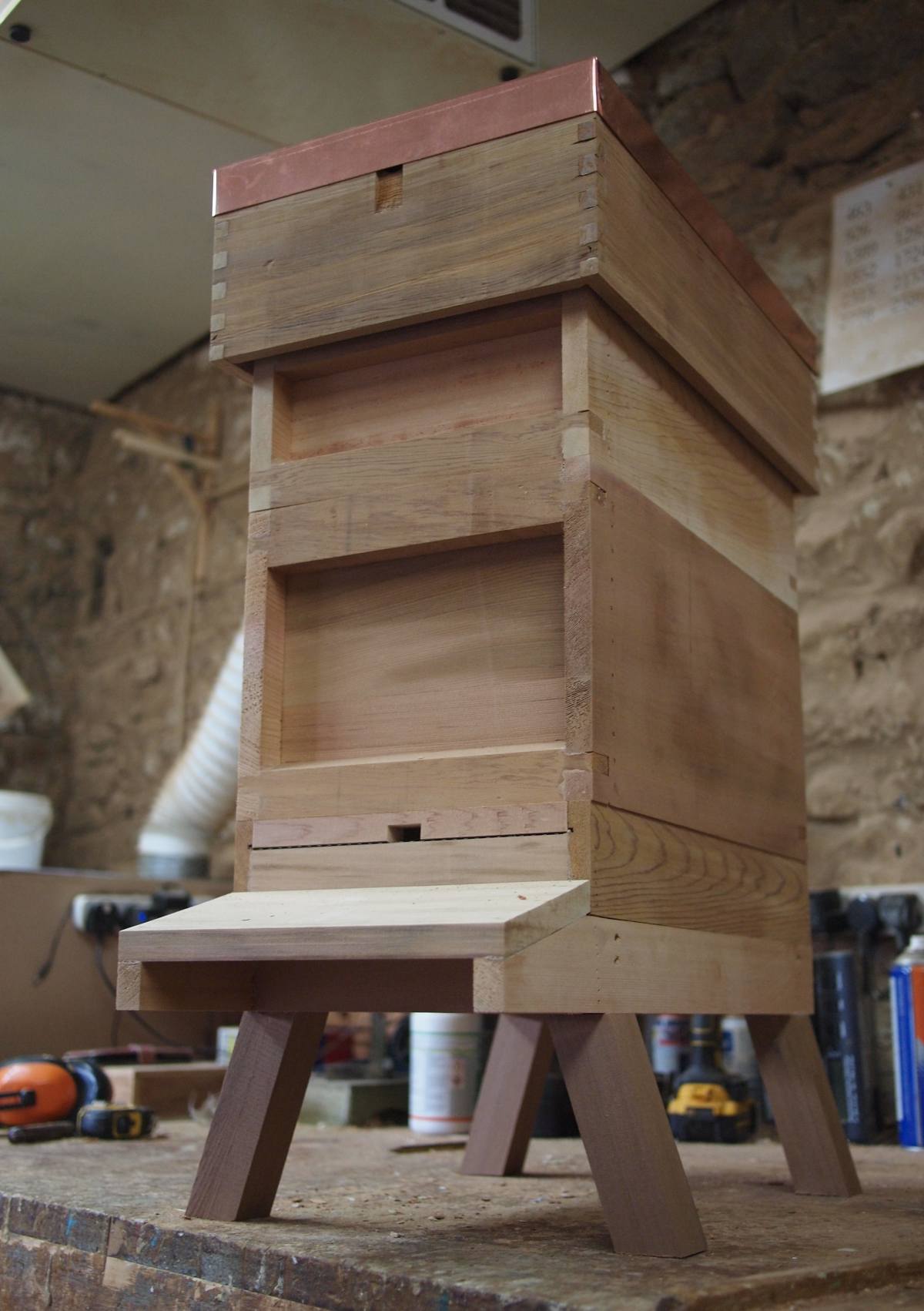 Also recently completed is this National Hive in cedar with a Commercial Brood Chamber. Suitable for prolific bee colonies the Commercial Brood Chamber sits perfectly underneath standard National Queen Excluder and supers.  We’re getting busier now for the 2020 beekeeping season and thank all customers old and new for their orders. Standard National Hives are our main product but it’s nice every now and then to get special requests like this. Happy Beekeeping! We’ve just had an update from Helen the bee breeder we have worked with for many years and her Nucleus Colonies this year are priced at £200.00. “High quality, strong, healthy nuclei (nucs) comprising; laying queens (marked), 5/6 frames of bees, brood in all stages and stores. These are hardy and hard-working bees which are well-tempered and easy to handle. They build well in the Spring to make good, large colonies for early honey production. All in accordance with FERA recommendations. Varroa treated.” For an agreed price depending on distance she will deliver and install the Nucleus Colony to UK addresses. We’re very busy with National Hives and one or two special orders so the season is now well under way. Happy beekeeping 2020. We have had a fantastic response to the Photo Competition 2019 ‘Pollinators’. Unsurprisingly many of them featured honey bees but there were plenty of unsung heroes submitted including bumbles, butterflies, hover flies and moths. The overall winner though had to be this fantastic macro shot of apis mellifera mellifera. Just a stunning shot! Click to see the full size picture… 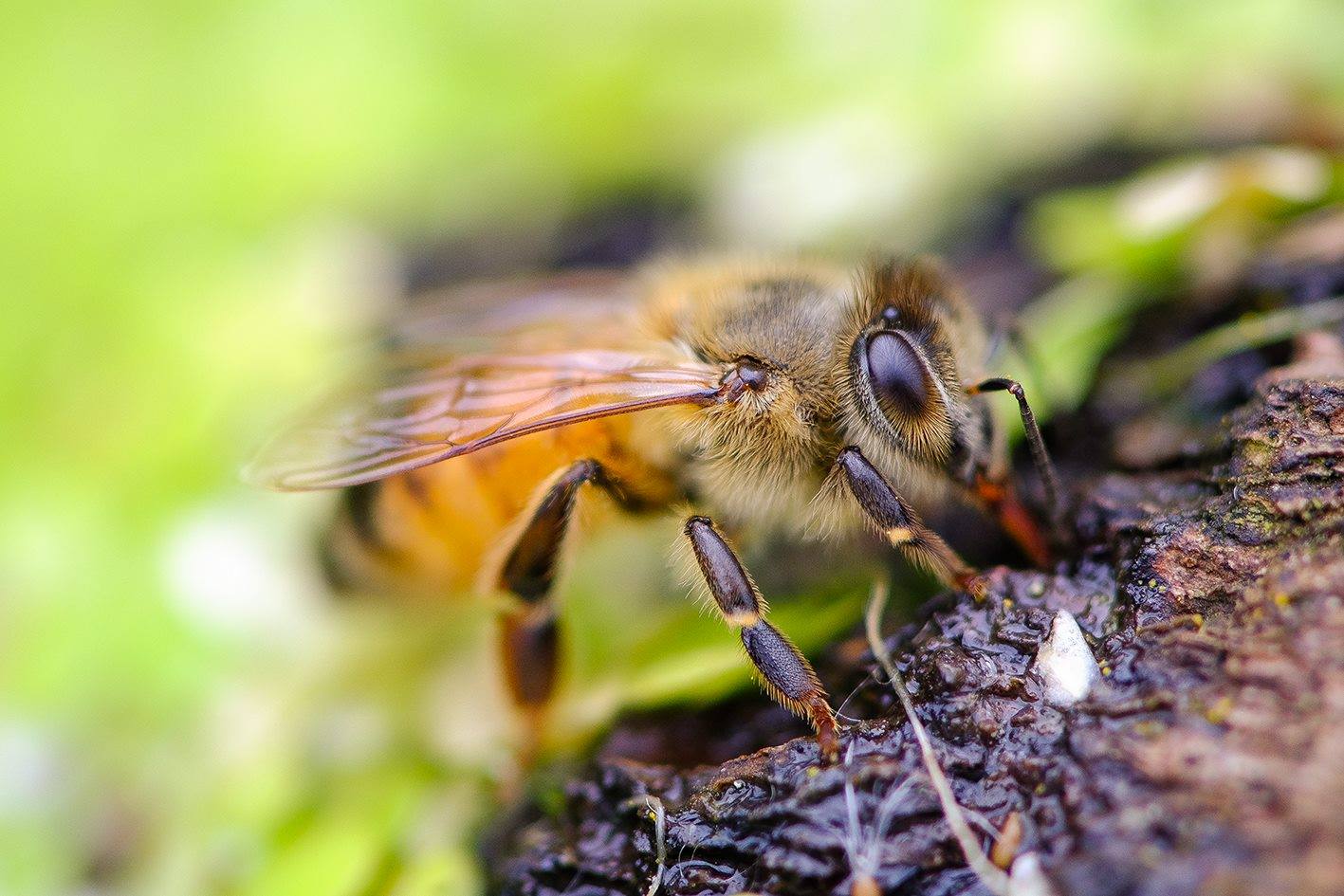 A Peak Hives 6 Frame Plus Dummy Board Cedar National Nucleus Hive will be manufactured in the workshop and sent out to the winner. I’ll add a gallery of other entries as soon as I can. Many, many thanks to all who took part. For his Peak Hives Cedar National Hives our long standing client requested deep flat roofs with copper roof metals. I had to commission these specially and I think they have turned out very nice indeed. It took quite some time and effort to get to this point but it’s been worth the wait. What I can confirm is that copper is an expensive material! 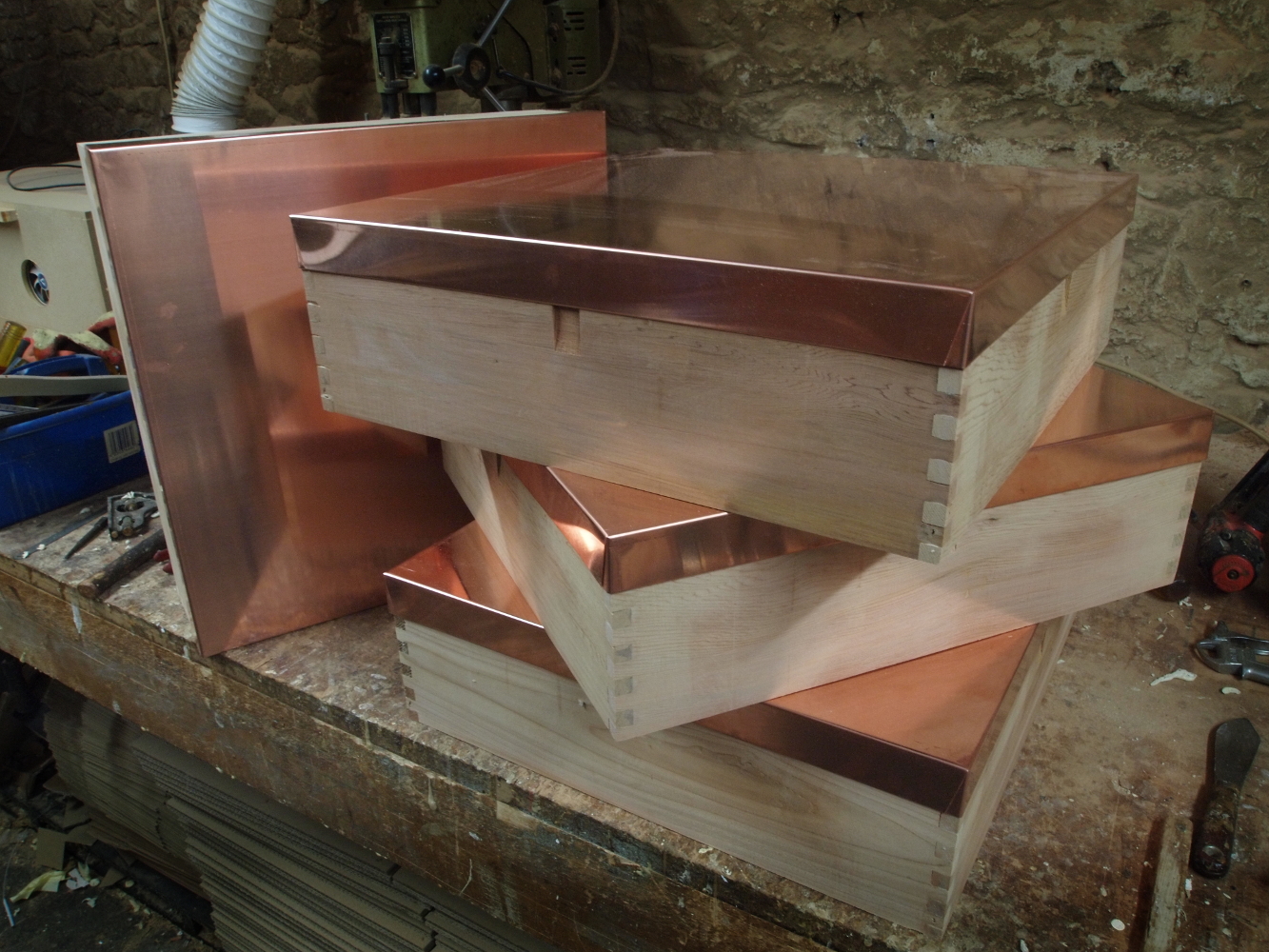 At this time of year I have some interesting projects on the go and they include Top Bar Hives, Observation Hives and I’m just about to start on a double length National with removeable partitions in the extended brood chamber and four entrances. Looking forward to working on that one. The latest piece out of the Peak Hives workshop is this Oak Observation Hive with engraved logo. Honey bee researcher Craig contacted me with the request for the hive and asked if it would be possible to engrave the University of Aberdeen logo on the brood chamber. I had recently acquired our laser engraver to provide the possibility of engraving security codings such as postcodes, addresses or mobile phone numbers onto our National Hive products so I was very pleased to be able accommodate Craig’s request and engrave the University logo onto the observation hive. See below for the finished product.  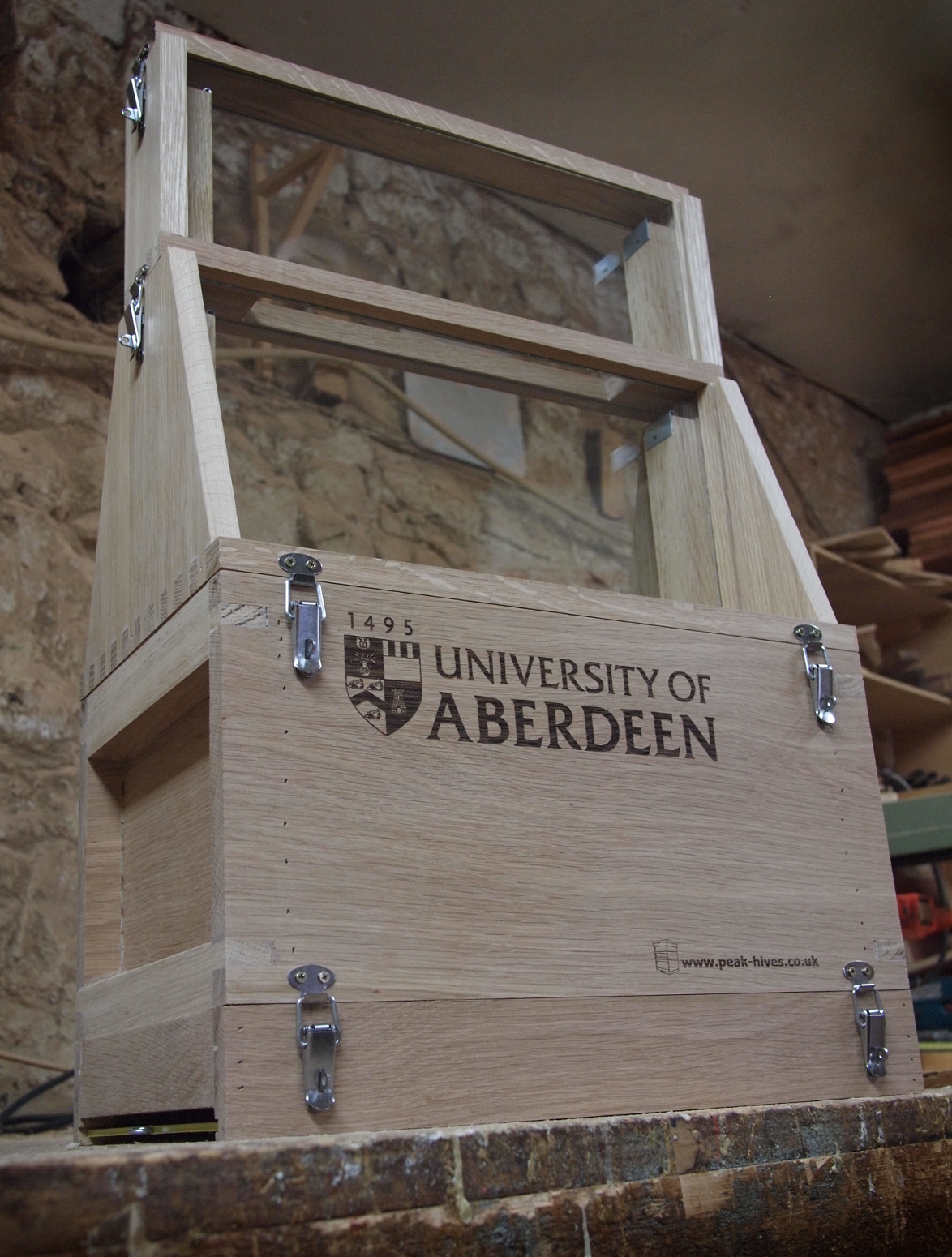 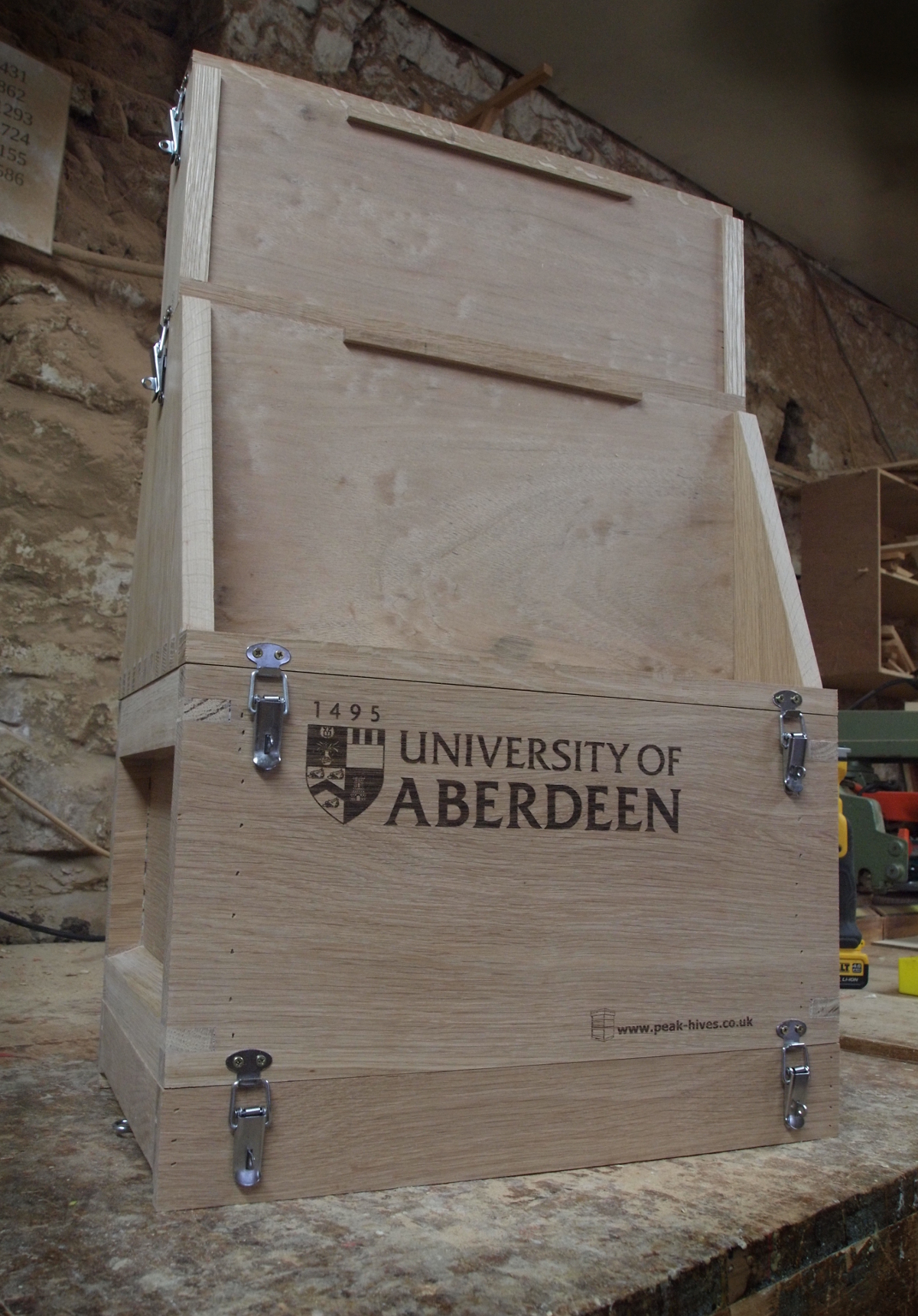 I’m very pleased with the outcome and will be shipping the hive to Craig later this week. Having recently acquired a laser engraving machine we’re now able to engrave the Peak Hives logo onto our hand made National Hives and Nucleus Hives. Here’s an example. We’re not going to turn every item into a billboard but a small logo will serve a useful promotional purpose to support the business. What it also means is that we can offer ‘security’ branding. Our customer in the case of this 6 Frame Plus Dummy Board National Cedar Nucleus Hive has chosen to have her Post Code engraved on the Brood Chamber. 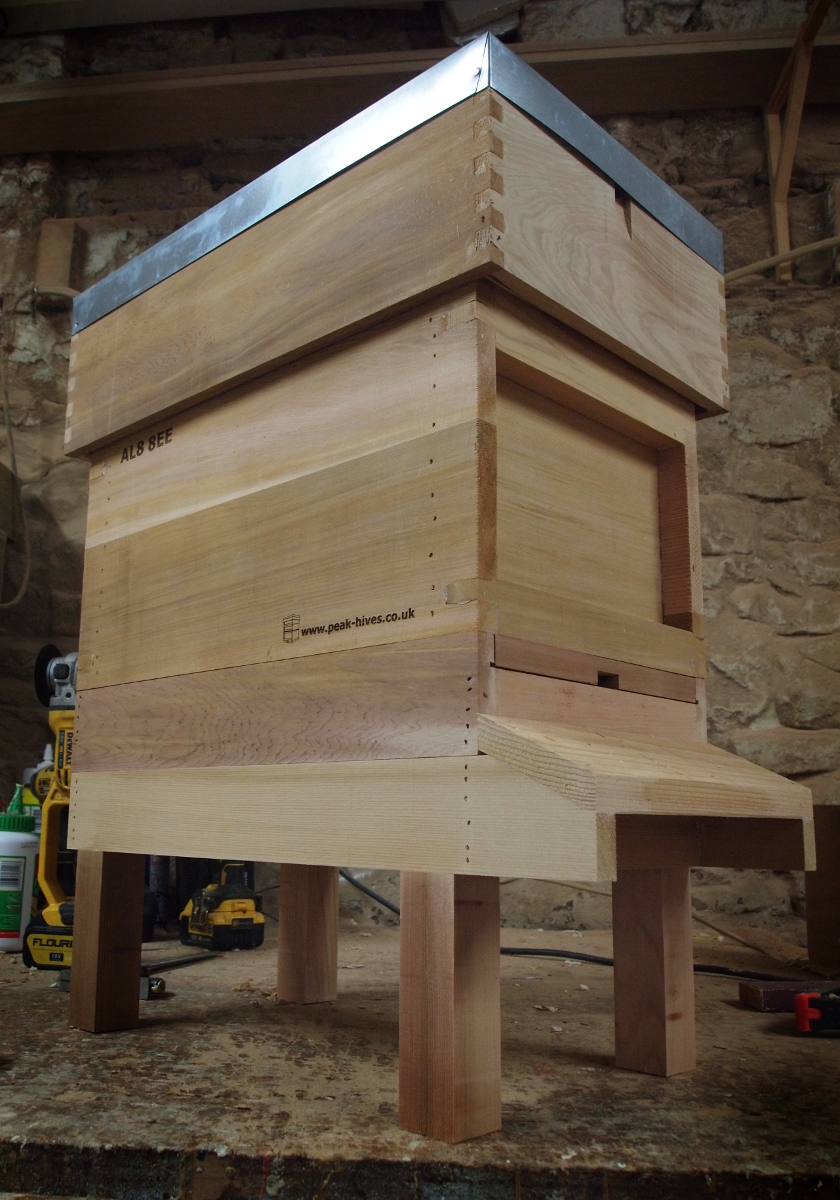 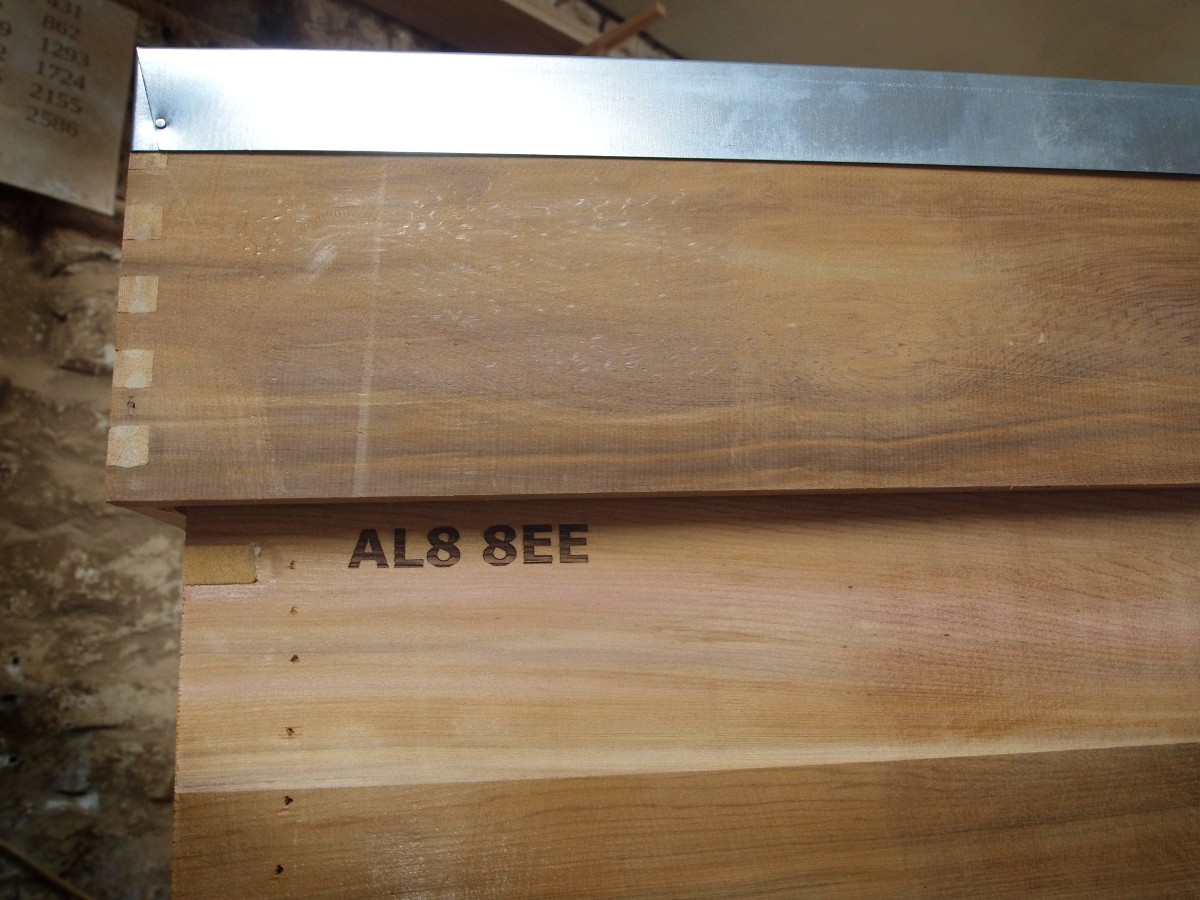 In an ideal world theft wouldn’t happen but unfortunately it does and there’s even been cases of hives full of bees being stolen so we’re happy to offer this security service to our customers. We can engrave your Post Code, Phone Number, Name or anything you prefer as an identifier. I’ll be adding the option to engrave on the Peak Hives website soon but in the meantime if you order and want a security engraving please let me know by email. We’re still very busy with National Hives and I’ve just placed a large order for First Grade Western Red Cedar to deal with Christmas orders. Happy Beekeeping, Nick. Junk Rescue came to Peak Hives. The up-cycling CBeebies program came to the workshop and I converted an old chest of drawers to a National Hive. It was a bit of fun but it was a bit tight in our little workshop with Danny Sebastian and the film crew crammed in there… https://www.bbc.co.uk/iplayer/episode/m0007g97/junk-rescue-series-2-16-bedside-furniture  Now back to standard National Hives in Cedar and Red Deal. I’m also currently working on a couple of observation hives. On Monday we had a visit from Neville from Sheffield University who collected the Oak Observation Hive in the picture. It’s to be used in the Department of Computing! Analysis of bee behaviour and how it can be translated into algorithms. Tuesday saw the collection of the other Observation Hive pictured. It is to be used to demonstrate bees in schools. The schools one is a self contained unit just for demonstration and the other has an entrance which will go to the outside of the laboratory so it will be a living and working colony. 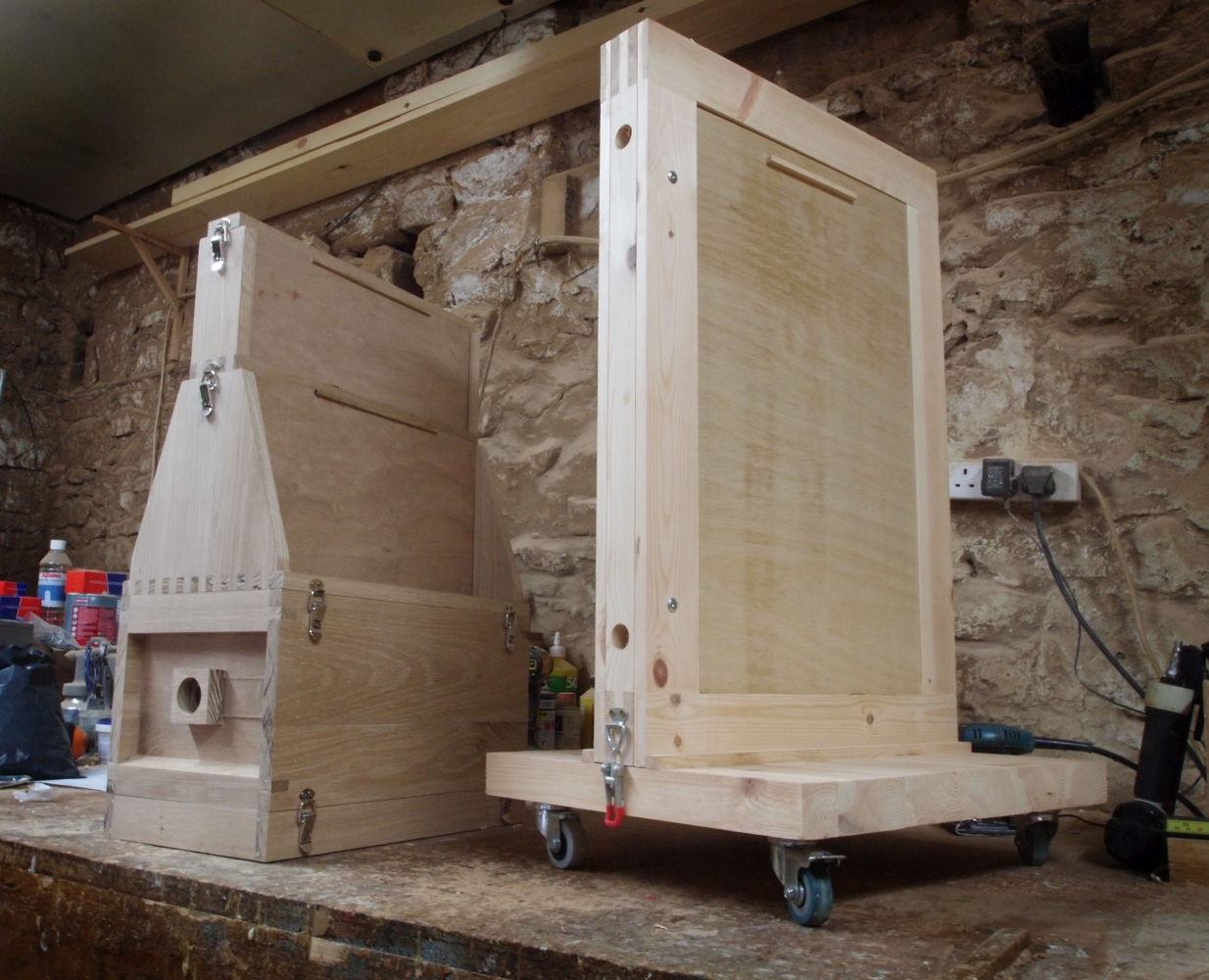 Also new is that we have propagated Buddleia globosa and are adding these to the pollinator plants for sale. 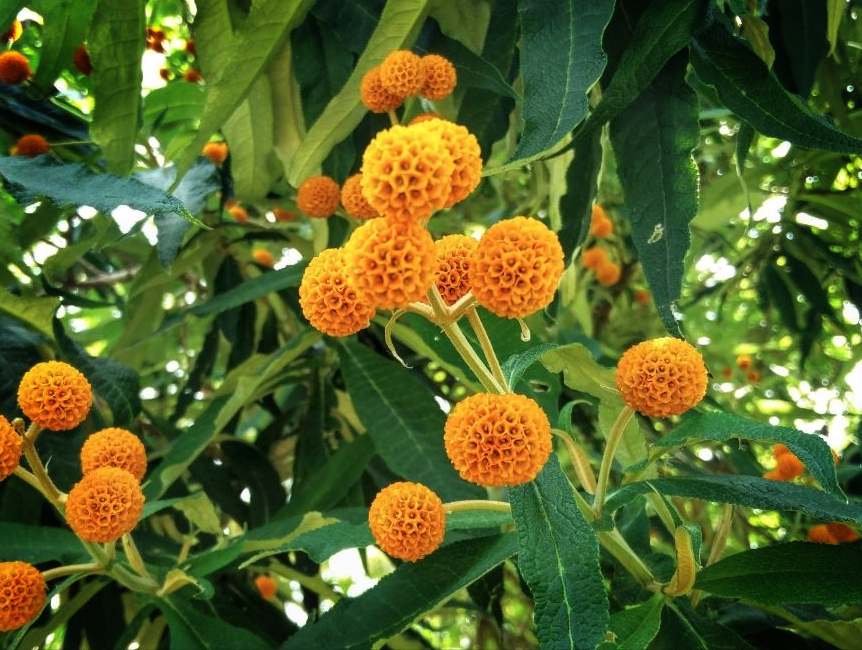 And finally we’re now official suppliers to Chatsworth House and I went today to set up two new National Hives in the kitchen gardens to the rear of Chatsworth House. Apparently the Duke insisted on purchasing our hives. I’m also very busy as per usual at this time of year making in our workshop our National Hives from First Grade Western Red Cedar and thank all our customers for their patience.  To mark the launch of our Pollinator Plants we’re once again holding a photography competition. This time the only requirement is that your shot features pollinators or something related to pollinators. So bees, butterflies, moths all count as would an interesting hive design or location or a bank of lavender swamped with bumble bees…anything pollinator related. First prize is one of our Cedar 6 Frame Nucleus Hives with a Varroa Floor. Copyright of the photograph will reside with the photographer with license to use being given to Peak Hives. Cheers and please email all entries to nicholas@localhost marking the email Photo Comp 2019. Closing Date will be 1st of November. Happy Snapping and have a great beekeeping season. Nick As we’re now in the busy season and Adriana is working very hard for her teaching qualification order acknowledgements will be sent out on Thursdays for the previous week. This means that I can get on with making up our High Quality Cedar National Hives and Hive Parts in the workshop. If you place an order with us you’ll get the standard Paypal receipt and then on Thursday we’ll send out a PH number and an expected date for dispatch. At this stage in the beekeeping calendar it’s always difficult to keep up with orders and we thank our loyal customers for your patience. We’re very busy now and thank our customers for their patience in waiting for their Peak Hives National Hive products to arrive. We are also busy in the propagation of pollinator plants and have just added Stachys byzantina (Common name ‘Lambs Ears’) and Verbena bonariensis in the pollinator plants section of the website in the right hand column. Both are super pollinator plants and are now available in 1 and 2 litre pots. 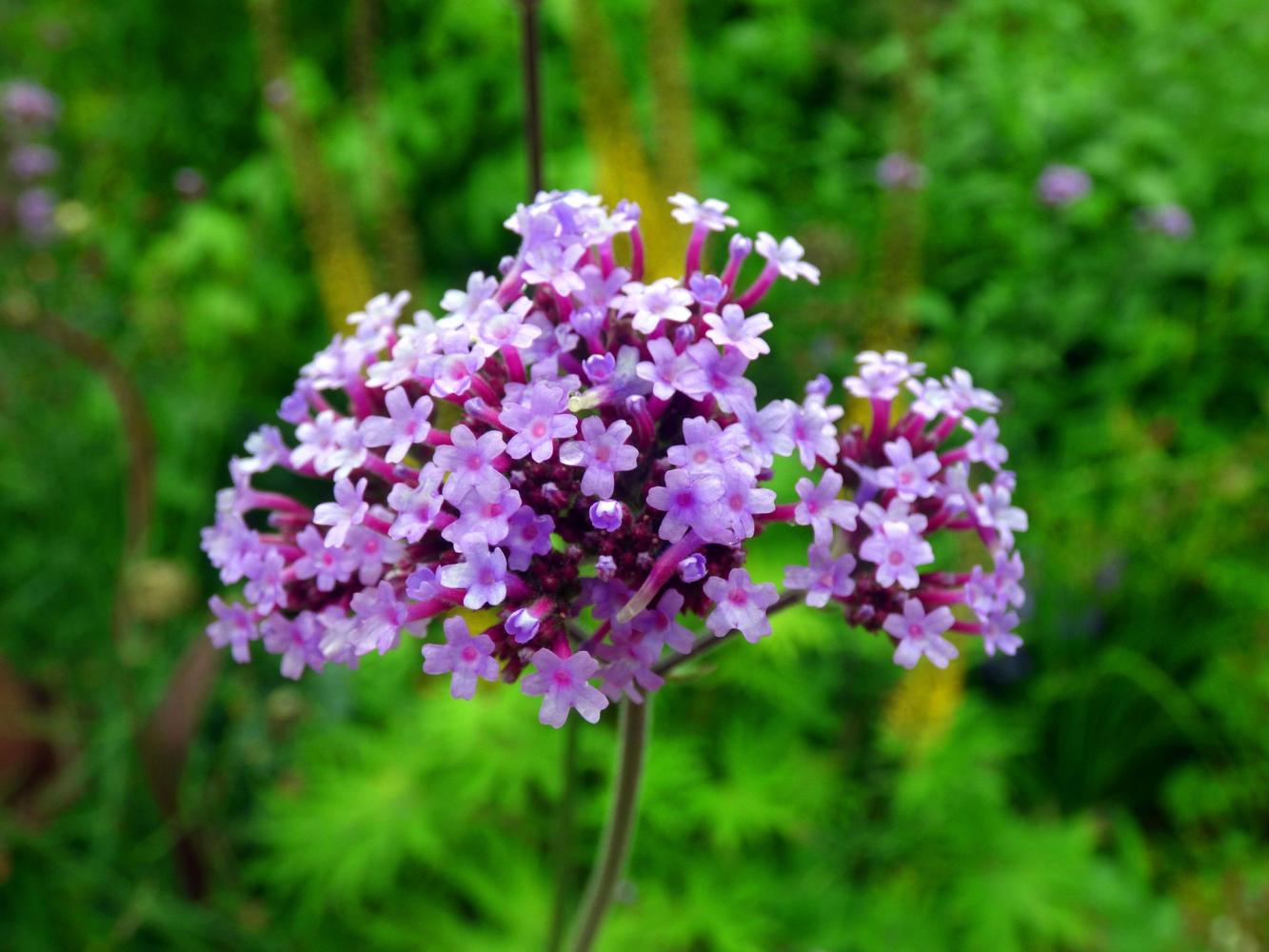 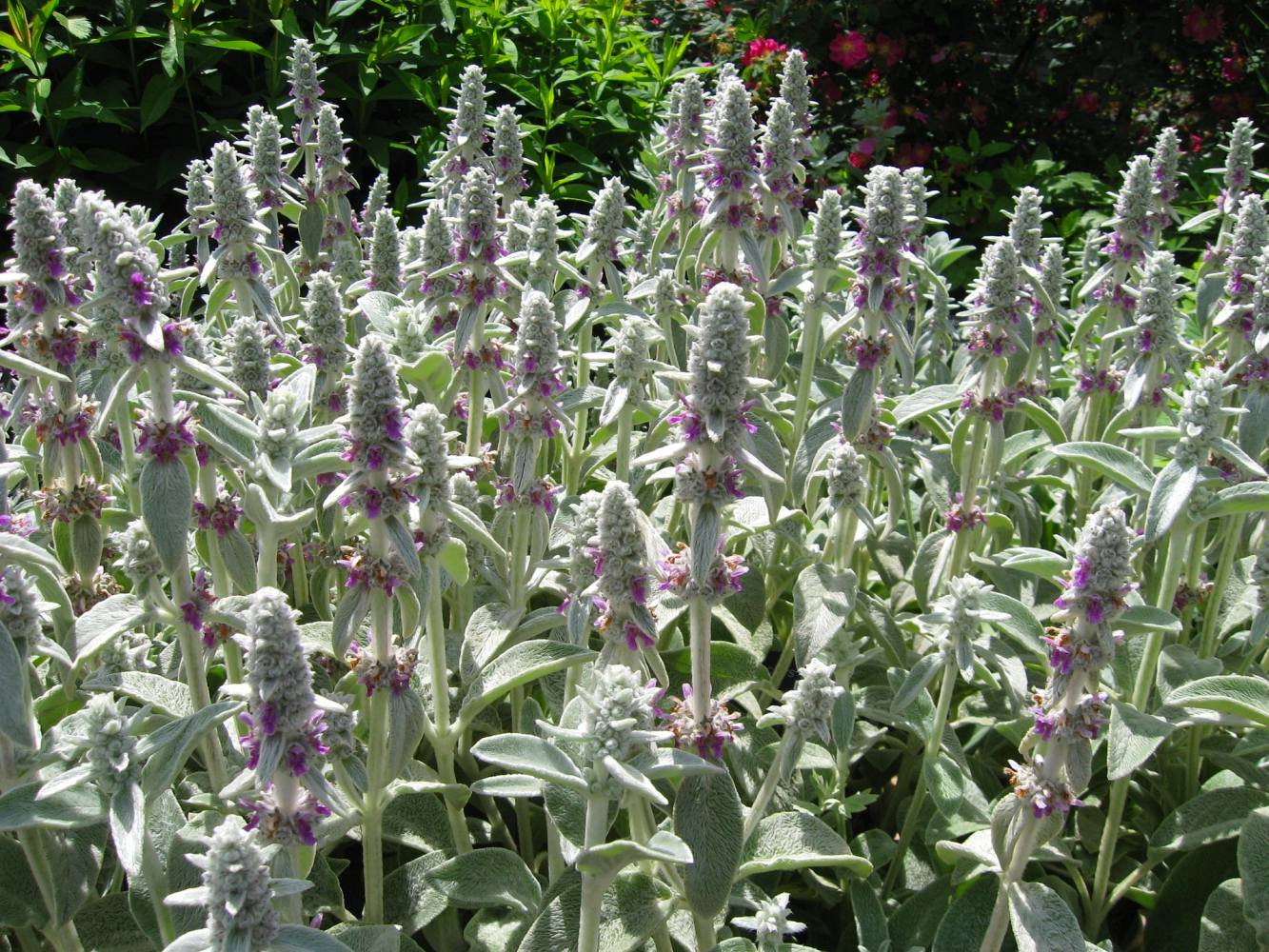 Our bee breeder Helen has sent us details of her super Nucleus Colonies to be supplied in 2019. If you’re looking for a Nuc then hers are top quality and you even get a named queen and as an additional service she can come to you to install the colony in your Peak Hives National Hive. A long standing customer wanted me to undertake this ‘special’ and make him a Queen Castle. It’s basically 4 x 2 frame Nucleus Colonies under a single roof. Each side of the Queen Castle has a unique entrance for one of the colonies. There is enough room in each compartment for two Hoffman Brood Frames and a Dummy Board for manipulation. Hope it works well for H. our loyal customer. 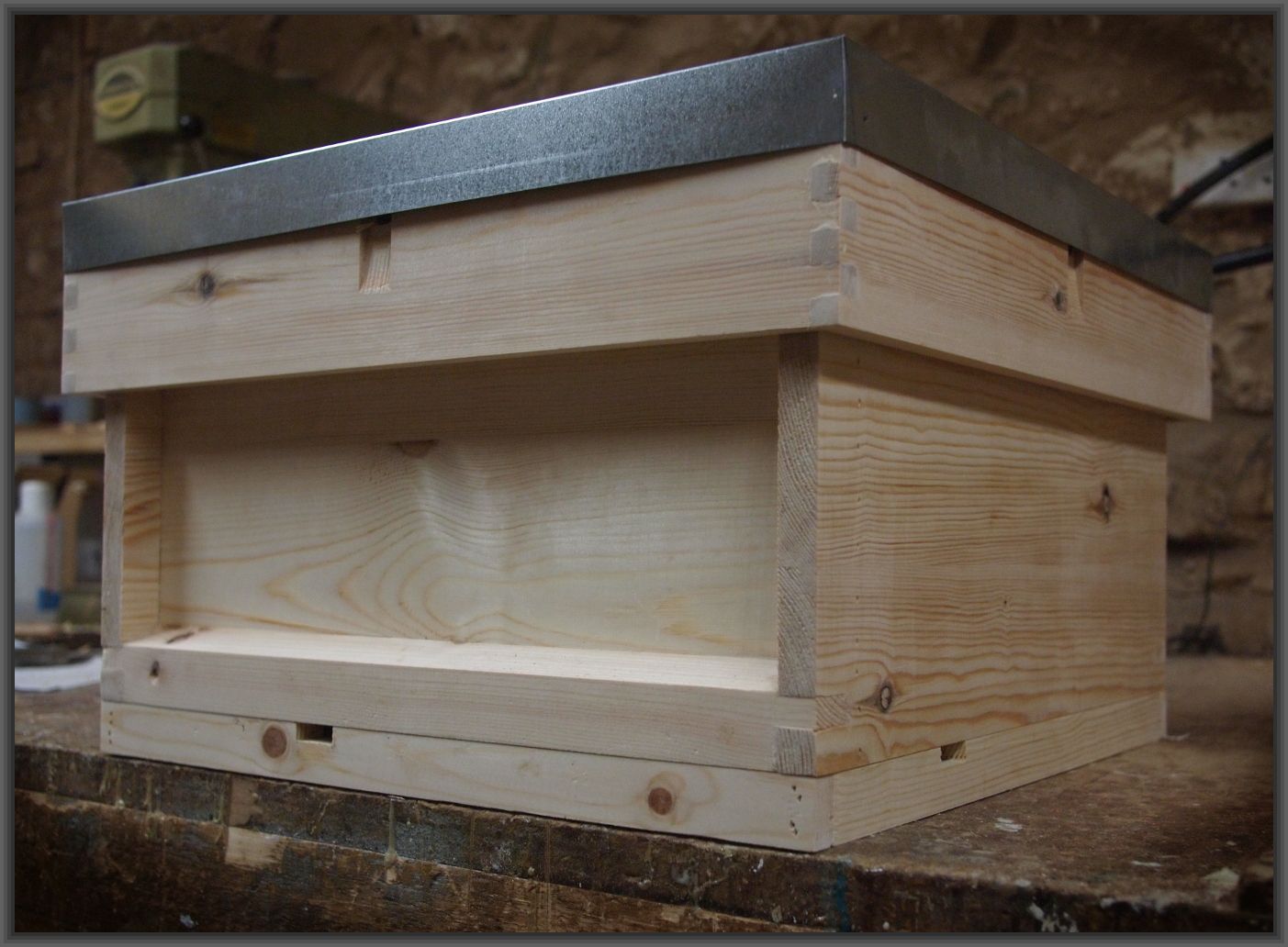 Queen Castle 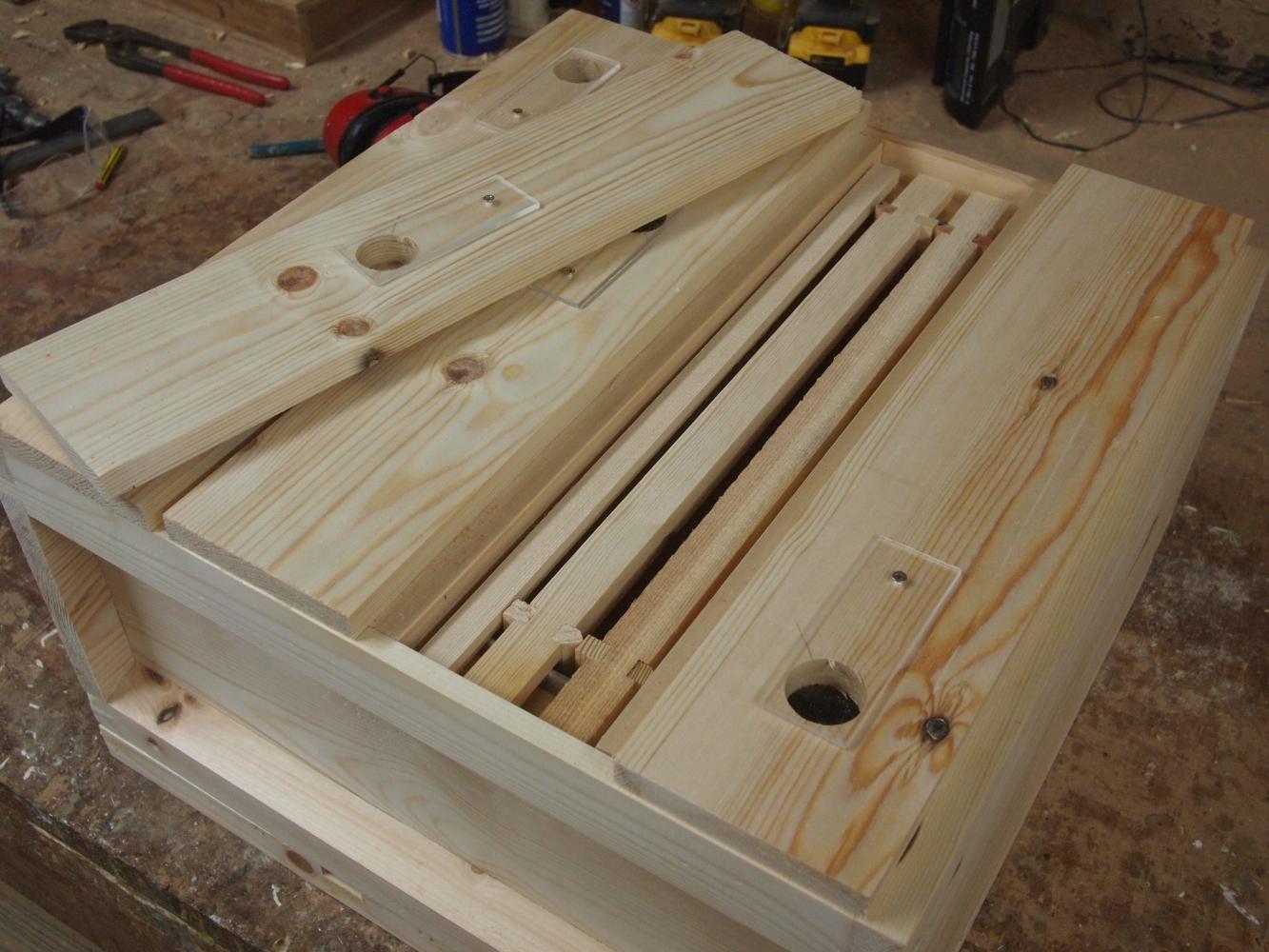 Inside Queen Castle  Queen Castle Inner Here’s also a quick shot of the polytunnel. The Veronica Spicata ‘Heidekind’ is in the foreground and the Ceratostigma plumbaginoides (Leadwort) just behind it and the Rudbekia fulgida var. deamii just visible. 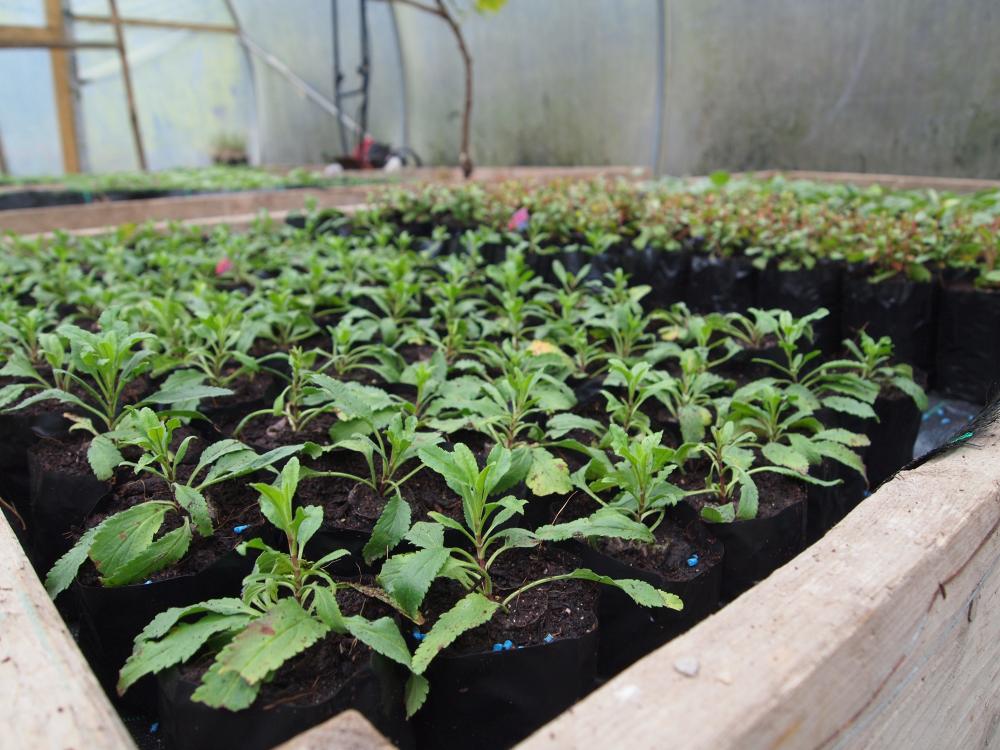 Pollinator Plants in Polytunnel Meanwhile in the Misting House we have the heated misting bench full of Pollinator Plants looking to go to their new owners. We’re overwintering some plants that have already been sold and will send out to our clients as soon as the weather picks up in the new year. Can’t wait for Spring 2019.  Bee Plants on Misting Bench Apart from the ‘specials’ and polytunnel business we’re busy as usual making the mainstay of the business which is high quality hand made Cedar National Hives. A note here on quality. We only use first grade Canadian Western Red Cedar and don’t use cheaper lower quality cedar which we are aware is available and have been offered. As a business we have opted to keep our quality of materials and workmanship to a high standard on our National Hives. Our long standing customer Adrian is having a birthday soon and as a present he has had commissioned this observation hive. It is a 6 frame 14×12 Nucleus Hive made from Oak and has the observation window piece above with the optional super frame. He collected it from the workshop today and was pleased with the piece. Happy birthday Adrian!  Happy Birthday Marrying our love of beekeeping all things bees and an equal love of gardening Peak Hives are proud to announce that we will be establishing a new line in Pollinator Plants. As with our hand built Cedar National Hives made in our workshop from start to finish our Pollinator Plants will be propagated and grown on in our own Propagation House and Polytunnel here in Tideswell. There’s such enjoyment to be had in watching a mass of bumble and honey bees working a plant they love.
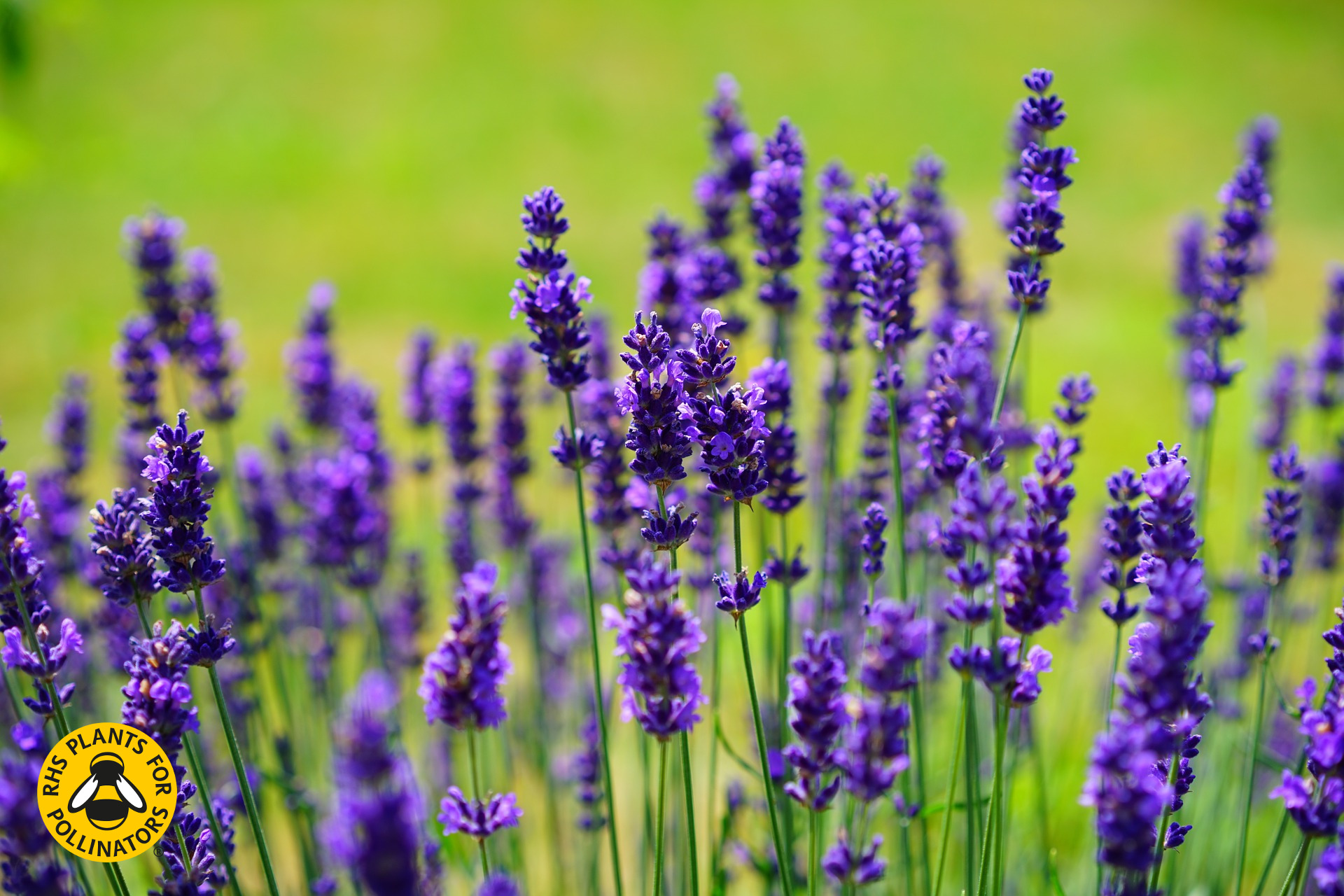 Lavender Hidcote As a first offering we will be raising both 1 ltr and 2 ltr pots. Orders can be placed from now on for delivery in 2019 and the best plants will be selected as orders come in. These are plants that we have already propagated this Summer/Autumn and will overwinter ready for dispatch in the Spring. It’s early days but we already have over a thousand plants in pots in the polytunnel. The initial list of plants includes… (flowering season in brackets) Achillea ‘King Alfred’ (Summer) Lavender ‘Hidcote’ (Summer) Lavender ‘Rosea’ (Summer) Lavender ‘Devon Compact White’ (Summer) Potentilla ‘Golden Starlit’ (Summer) Potentilla ‘Scarlet Starlit’ (Summer) Pulmonaria ‘Trevi Fountains’ (Spring) Veronica spicata ‘Heidekind’ (Summer) Dahlia ‘Bishop of Llandaff’ (Autumn) Ceratostigma plumbaginoides (Autumn) Sage officinalis ‘Icterina (Gold)’ (Autumn) Euphorbia ‘Baby Charm’ (Spring) Helleborus orientalis hybrid ‘Pink Lady’ (Spring) Rudbeckia fulgida var. deamii (Summer) We’ve also added a couple of Plant Breeders Rights varieties as they are such good plants for bees and pollinators. We won’t be able to propagate these until we establish a relationship with the breeder in question (already in hand). Geum ‘Totally Tangerine’ (P) (Spring) Iberis ‘Masterpiece’ (P) (Spring) Watch out for Peak Hives Pollinator Plants on offer soon… Something’s wrong when we’re having to do this…
to bees. We’re so busy making National Hive products that emails are not currently being answered. I know it’s not good practice but there’s no way I can handle all the responses needed to the enquiries and also have time to make already ordered items so I hope all customers will understand if emails and calls aren’t replied to as timely as they should be. All the best Nick and Adriana. The first delivery of 1st Grade Western Red Cedar to arrive at Peak Hives this year. Because of steeply rising material prices we have had a choice to make. The options were to continue to make our National Hives using the same First Quality Western Red Cedar or to buy in an inferior Cedar that is currently being offered far cheaper. We have chosen to stick with our high quality material and not to think only of short term profit. Whether it’s Brexit or some other economic factor that has pushed prices up I don’t know but when the latest material invoice arrived I had to sit down and think a while…  Western Red Cedar 2017 Conclusion… Customer satisfaction comes first. Happy Beekeeping to all our customers for 2017! Helen our bee breeder has just sent me some updates regarding her super nucleus colonies for the upcoming season and also the courses she runs for new beekeepers. Click the links below for further information… Keeping Honey Bees – Course info As for Peak Hives we’re busy making our Cedar National Hives and the occasional special request and looking forward to a few days off between Christmas and New Year. Seasons Greetings to all.
Melvyn Bragg is currently presenting a radio programme on the history of t’ North… Our National Hives are the ones Melvyn talks to Adrian about at the start of the Programme. It was only after completing the hives for the project that I found that the worker bee was the symbol of Manchester. http://www.bbc.co.uk/programmes/b07synwj We’re still very busy in the workshop but have afforded ourselves a few days off during the summer and would like to thank our customers for their patience. An item that will soon be added to the Peak Hives product line is the Top Bar Hive. They are proving very popular and despite them not being National Hives we will happily add them to the Peak Hives family. As a Winter project I was asked to make the 50 first Eat Natural Hives. Quite good fun and using recycled pallets the specially designed hive looks a treat… There’s a video of me making them at Usamah from the East London Mosque sent me this image of their Peak Hives Observation Hive a couple of days ago. It’s sat in a courtyard in the Mosque. They seem to have it set up as Brood, Super then Brood. Must be a reason but it’s looking good anyway.  ELM Observation Hive
We are very busy at the moment as it’s the height of the season and we get frequent calls of the nature ‘…help I have a swarm and need….’. We do our best to help but with us being a small business it’s hard to keep up with demand sometimes and we definitely don’t like to mess with the order queue for our National Hives. A month or so ago I was asked if we’d like to be in the FT in an article based around Artisans… Here’s a link to the article. https://next.ft.com/content/911e8538-1856-11e6-b197-a4af20d5575e I’ll write more on this later but for now must get back to the workshop to make up some hives… Nick Not directly bee related I know but I do like to put a thing or two about our allotment and polytunnel in the blog every now and then. Peach trees blossom very early in the year even before they get leaves and before bees and other pollinating insects are around. So, a tickle with a sable paint brush around all the flowers is the way to spread the pollen and hopefully get a good crop. This is the second year for our peach trees in the polytunnel and they are doing superbly. Last year even though they were only planted the Autumn/Winter before they produced several of the most juicy and surprisingly large and tasty fruit. This year the trees are covered in blossom so it looks like we might be in for a bumper crop. 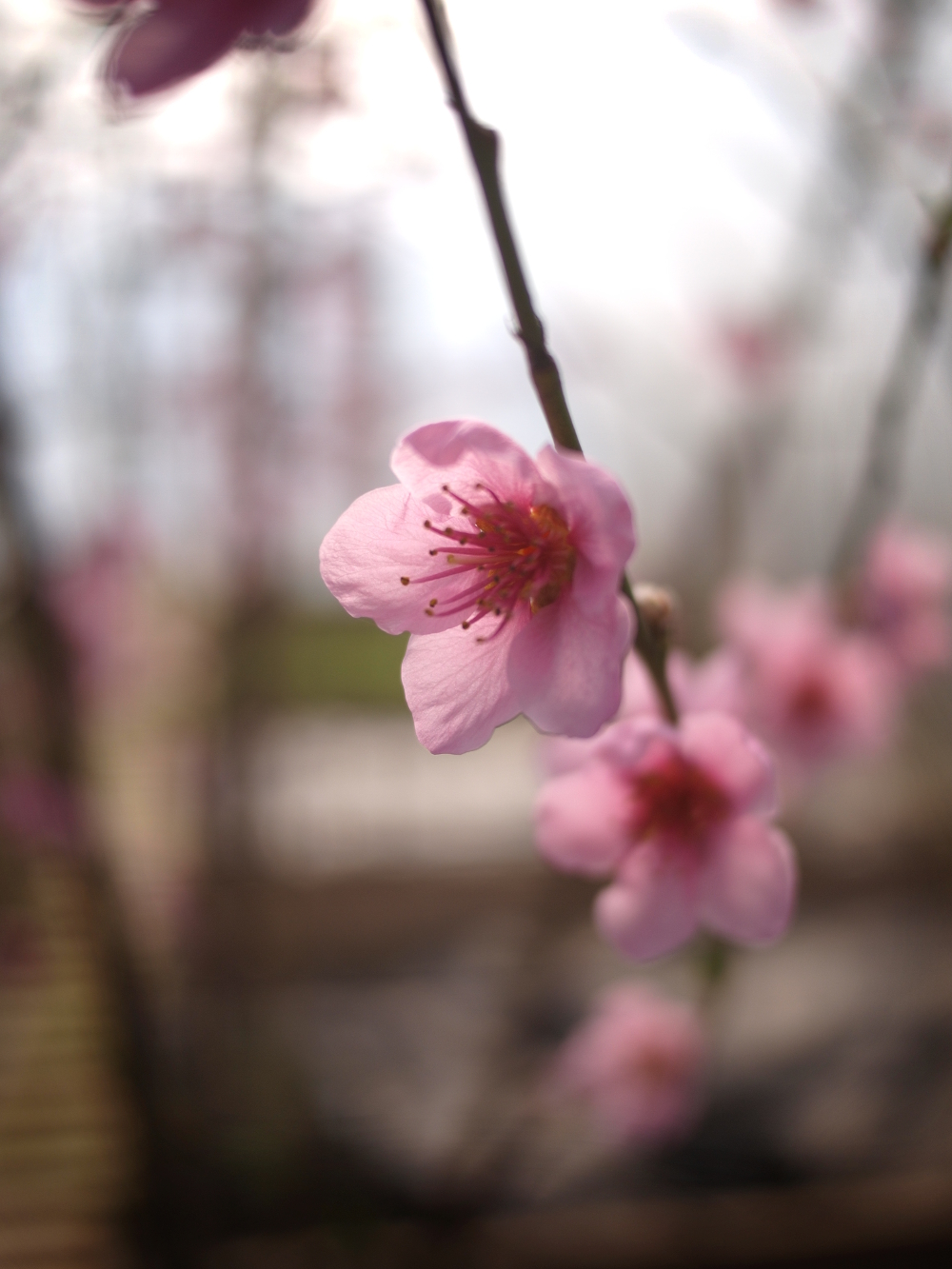 Peach Blossom We’re very busy as usual at this time of year and have sent many Cedar National Hives out to customers. It’s very gratifying to see so many repeat customers. We’ve also sent several of our hives to Europe. Last week a Peak Hives Top Bar Hive found it’s way to the Mosel Region of Germany. Our 6 Frame plus a Dummy Board Nucleus Hives are also selling well…must remember to put up the prices…;-) At the start of every beekeeping season I invest in new blades for all my machines. It’s not always so urgent because Cedar is a very forgiving timber to work and doesn’t cause too much wear on the TCT on a blade. But it’s more or less become a tradition in the Peak Hives workshop and it is nice when the new blades cut for the first time…hot knives through butter!!!  New Blades We’re now busy with our standard National Hive products so I can’t take on any ‘specials’ until the back end of this season…but I do like the odd Observation Hive or Top Bar. Nice to make a variety of things. Our customer is returning to beekeeping after a period of some years away from the hobby. Now that she has opportunity again she said she’s really looking forward to getting back into it and has ordered enough National Hives and Nucleus equipment to see her through at least the first season. There’s two full National Hives in Cedar and a Nucleus Hive also in Western Red Cedar. The customer also bought Ashforth feeders for the full sized hives and the Nucleus.  National Hive Apiary I think it’s also time for me to cut a path to my hives kept in my parents garden. They were put out of the way from my father who, when a few years ago was suffering with early stage Parkinsons, would stand right next to them to show his interest. So my bees had to be hidden away from him in the bushes where they’ve remained until now. A machete may be required to beat a new path to their door. We are getting busy again now and it’s looking like a full on beekeeping/hive making season ahead. So head down and fire up the machines for National Hive making. I do the odd special request every now and again too as can be seen from the blog entries…
Our bee breeder Helen has been in touch with me to say she is back making up Nucleus Colonies after moving house. Please see the attached Flier she sent us… She’s also running some Beekeeping Courses. In amongst the standard National Hives in Cedar it’s nice to get the odd request for something different. Our client asked for a Palmer Style Double Nucleus Hive in 14×12 size. It took a bit of head scratching and figuring out but here’s the result. The main brood chamber is split into two with two mesh floors pointing in opposite directions so the bees know which entrance is theirs. The brood then has two 14×12 height but half width ‘supers’ on top which each have their own crown board with ventialtion holes and porter bee escapes. This is then topped off with a 6 inch roof. I hope our client Simon has a great season with it and we’ll be shipping it out today.  Palmer Style Nucleus Hive Of course our bread and butter standard product is the top quality National Hive and it’s so nice to see that we already have plenty of repeat customers placing orders for this beekeeping season. Here’s to a successful 2016! And a Happy Beekeeping Season for 2016 from Peak Hives! I hope this current unseasonal weather gives way to some more normal sharp frosts and perhaps a bit of snow to keep the children happy. our bees should be fine as we left on a full super of honey and unless there’s some significant cold weather heading our way that should see them through. Meantime here’s a picture of a custom National Hive in Cedar built with half sized Supers. The customer didn’t want to be hefting full National Supers around and asked if I could make them 230mm wide instead of the standard National size of 460mm. At peak production times it would be harder to accomodate special requests as we are so busy with Standard National Hive orders there’s little time to find for anything out of the ordinary but in the quieter parts of the year we’re always happy to make non standard orders.  National Hive w Half Supers Here’s to 2016… 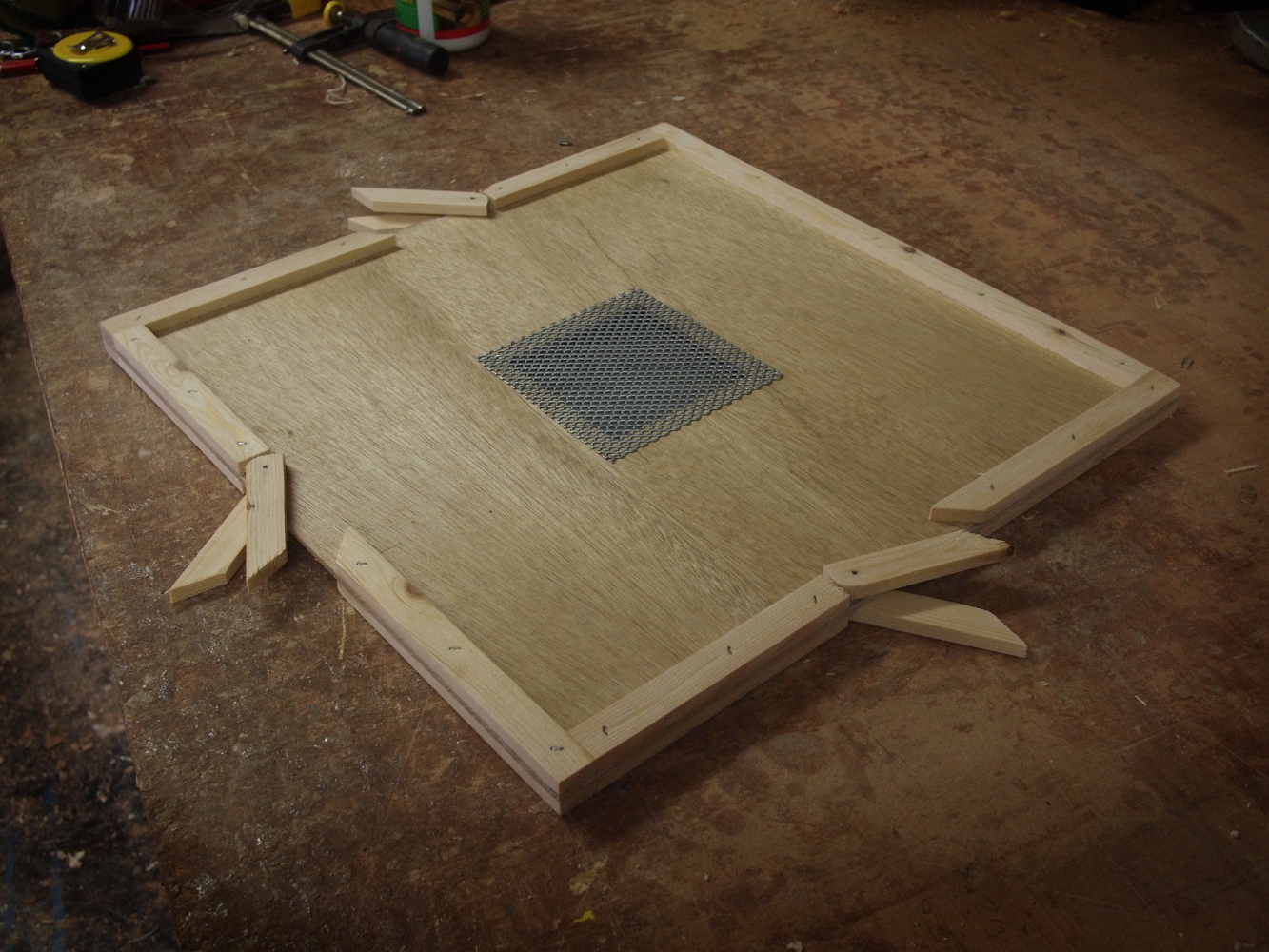 Snelgrove Board We’ve had many requests for these and now the beekeeping season has quietened down I’ve finally got round to making the required jigs so they can be made consistently to a high standard. The Snelgrove method of swarm control is well documented and a very good description can be found from the Barnsley Beekeepers website Snelgrove Method As with all our standard products they are made to National Hive size. These two Peak Hives products are just about to be dispatched to our customers who are getting ready for the 2016 beekeeping season. Thanks to them for ordering during the quieter part of the season! They are a full sized National Hive in Western Red Cedar with a 14×12 Brood Chamber and one of our popular 6 frame National Nucleus Hives along with a Nucleus Hive Super also in Cedar. The customer for the Nucleus Hive already had one from us in 2015 and ordered another because he said it had been very useful for queen rearing in his first beekeeping season.  2016 Season Hives On another note…listening to Inside Science the other day I noticed an interesting piece of work on identifying the curative properties of honey. Quote from BBC… “Bees and antimicrobial drugs An interesting part of the report stated that all plantlife in Wales had been DNA fingerprinted so pollen collected from the bees pollen sacs could be DNA matched to the plant it came from… No doubt that debate will go on but it does lean towards there being something of substance to the Manuka Honey/Hay Fever argument.
These two Top Bar Hives were ordered some time ago and are now ready to be shipped out to our customer Richard who lives in France. Apparently once our previous Top Bar Hive had been seen on the Peak Hives website no other would do. Nice to know our quality workmanship is appreciated. They are Cedar and have hinged viewing panels for less intrusive inspections. It’s a nice change to make a ‘special’ but our customer was also very patient and understood that we had to get on with our standard National Hive orders and work on these as and when we could. One day I’ll make one for myself as they do look an interesting way of beekeeping.  Top Bar Hives in Cedar We are about to have our annual holiday so enquiries and orders for our National Hive products received while we are away will be dealt with upon our return. All the best. Nick and Adriana. We’re mad mad mad busy making our Cedar National Hives. We haven’t had any quiet period this time around as we have fortunately had many returning customers which is great. I’m currently doing 7 day weeks (taking Sunday afternoons off to have a breather and do a bit in the polytunnel) and even so still struggling to fulfill all orders in good time. One thing I have had opportunity to do though is an upgrade in the workshop. The crosscut saw is about the most used machine in the workshop and has up to now had a Beech fence with a home made fence stop. It’s been accurate but every now and then I would have to fashion a new fence stop to make sure all was working correctly. Accuracy wasn’t the problem with it though. As a home made solution it tended to be awkward at times and needed too much maintenance so last week I splashed out on a Datum FlipStop. Installed it and a new Ash fence last night with the difference that can be seen in the pictures below. Very pleased so far… 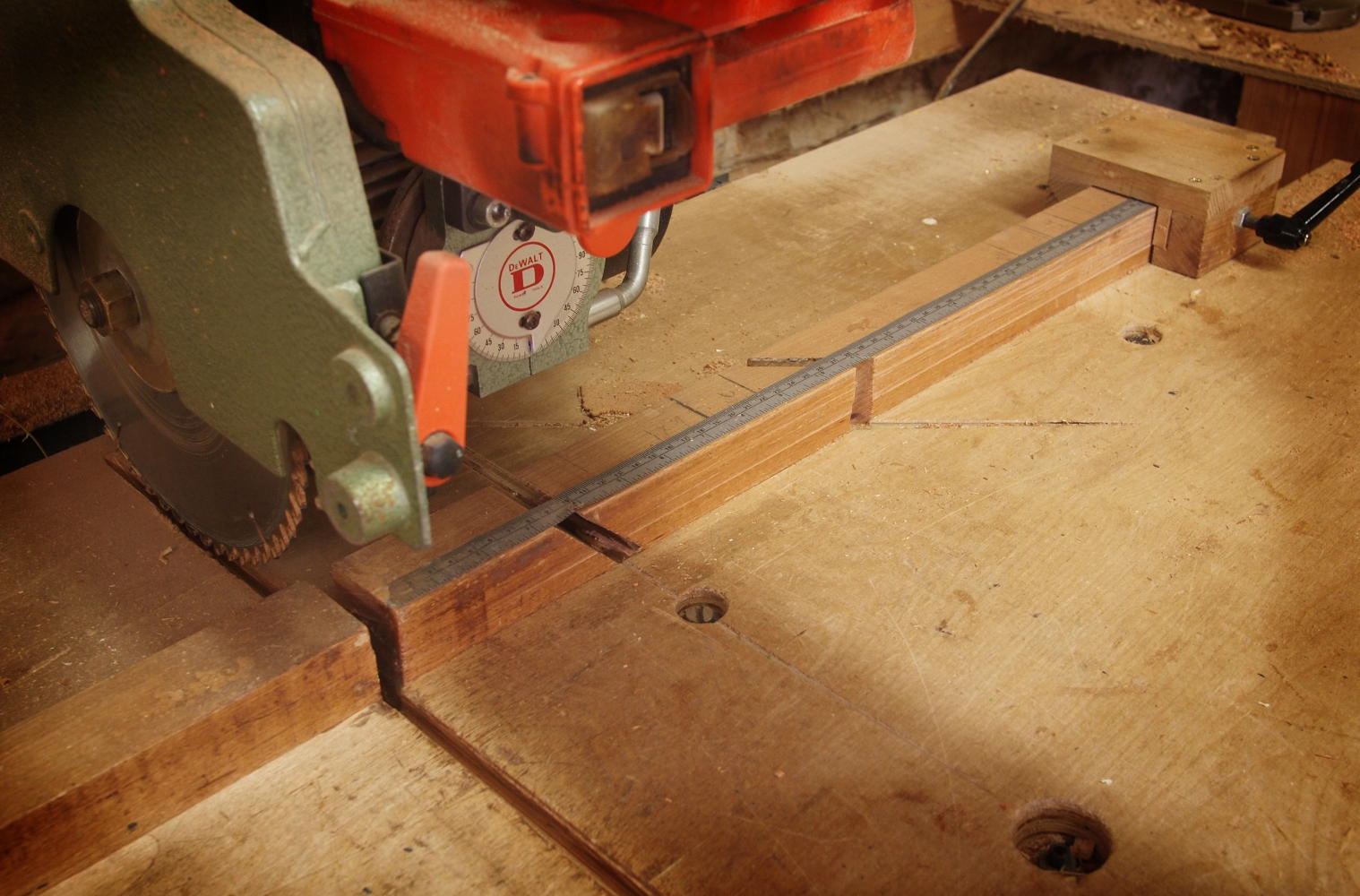 Old Fence 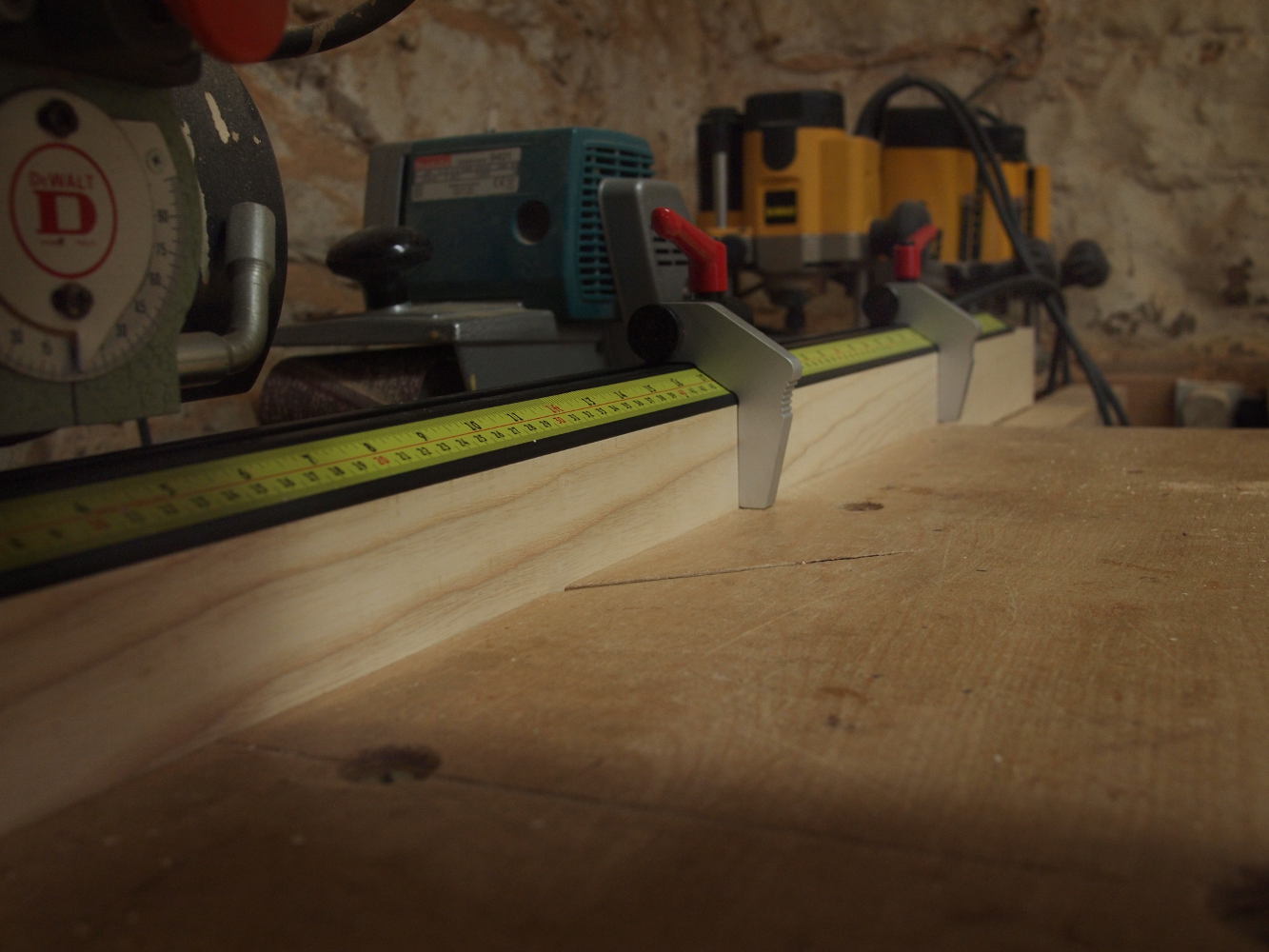 New Fence 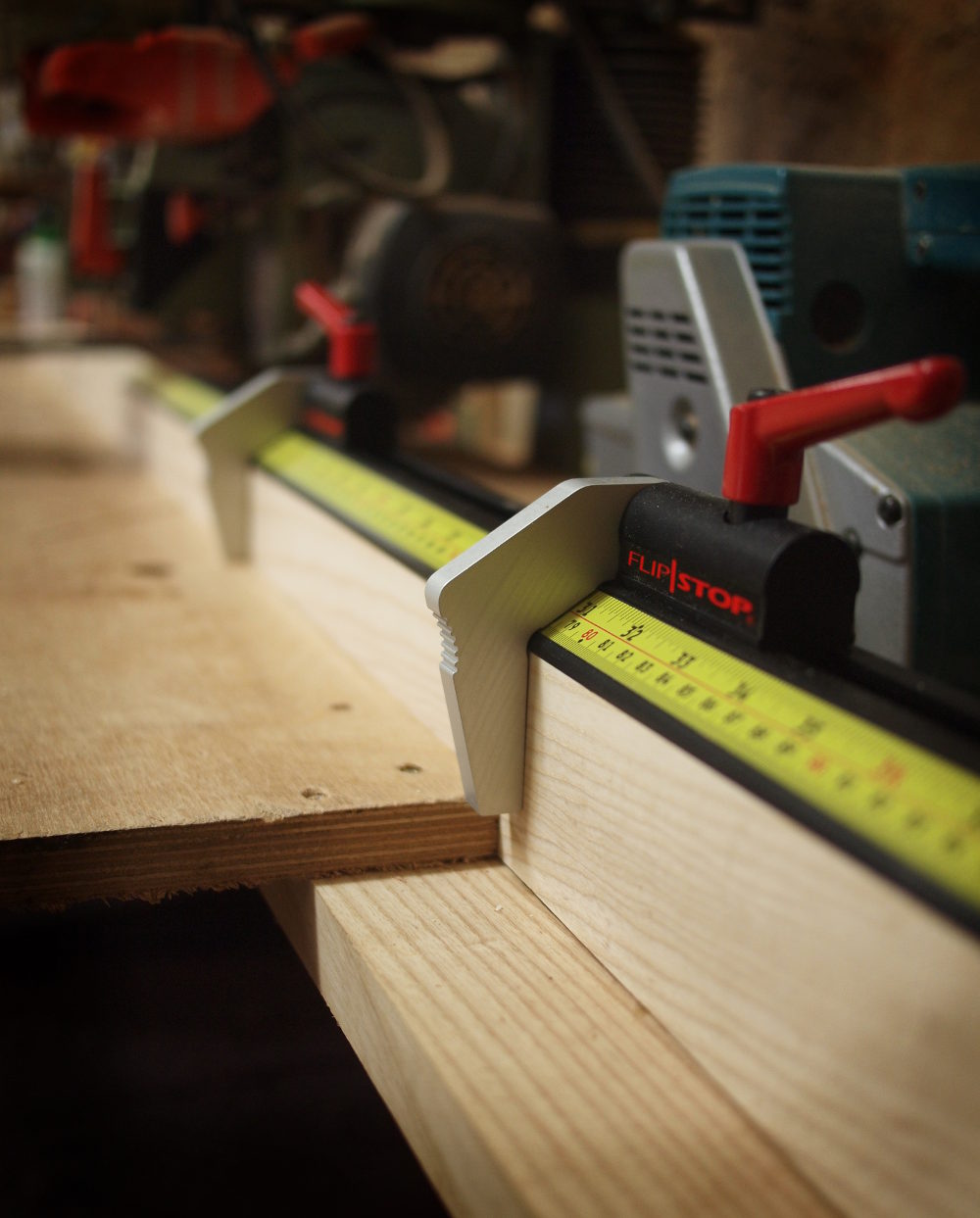 New Fence All the best to all our customers. Our National Hives are still our bread and butter product and we thank our customers for their patience. Here’s a National Observation Hive which has just left the workshop on it’s way to Scotland. Taken some time in the making and I prefer to do these specials when it’s the quiet season so I can spend a little extra time on the machining and getting it just right. Many thanks to David for his patience. It would have left the Peak Hives workshop last week but we have had a dump of snow and the gritters don’t come up our lane these days so it had to wait until the courier van could get to us.  Observation Hive Closed  Observation Hive Open For now that’s the specials done with as we are very busy with orders for our National Hives and looking forward to a great 2015 beekeeping season. After many many requests from our customers I’m pleased to announce that we now stock foundation wax. British Standard in Deep, Shallow and 14×12. We can’t hold a full gamut of wax but we’ve selected the most useful sizes of the wired foundation to stock. Our mainstay is of course National Hives in Cedar and the more economical Red Deal but we want to be able to offer everything you’ll need to get a hive up and running so adding foundation to the Peak Hives product line is a big step forwards for us. 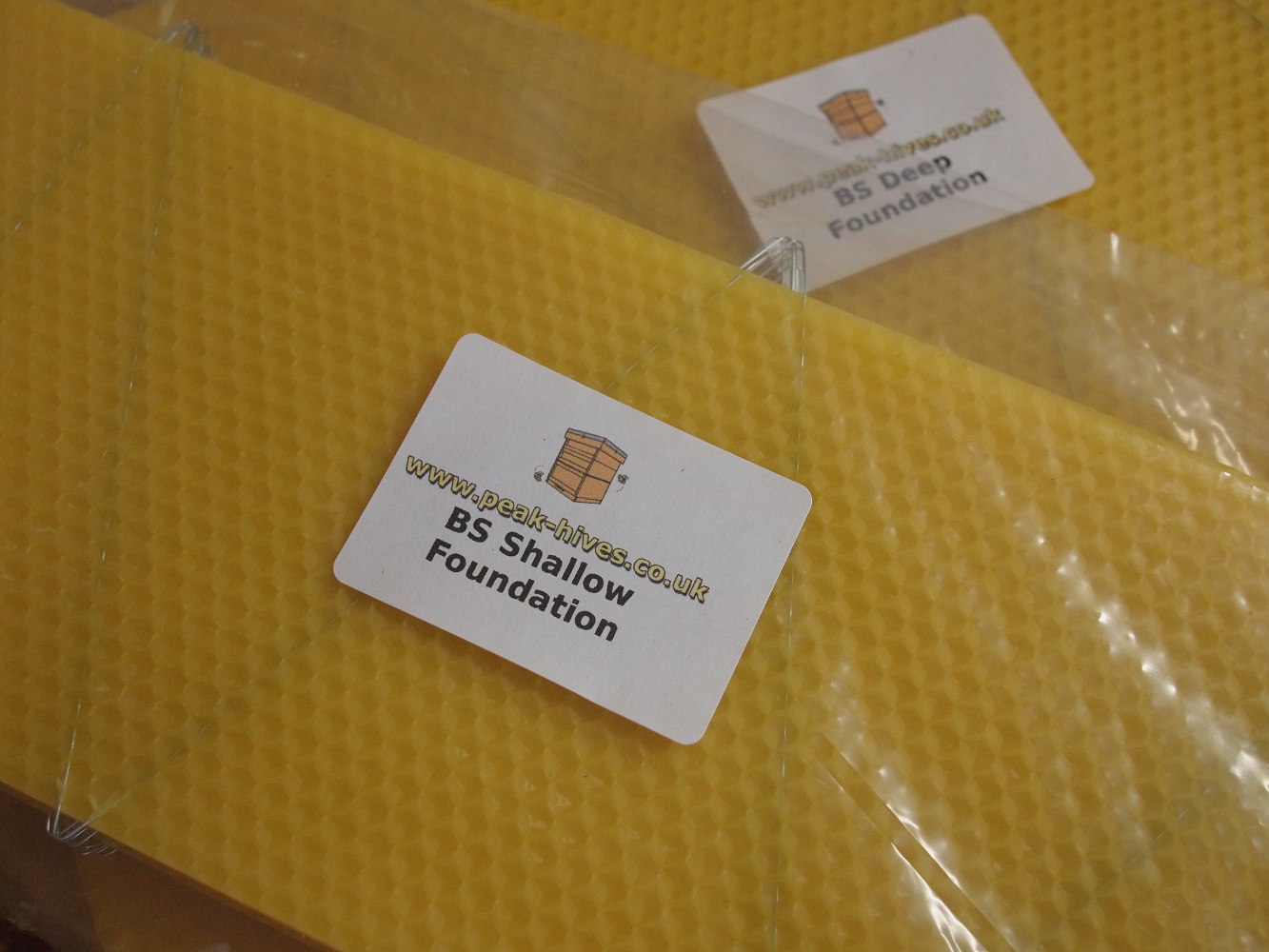 Peak Hives Foundation Wax It can be found near the frames and plastic frame ends lower down the left hand column. All the best and happy beekeeping for the upcoming season. We now stock plastic frame ends to fit on to SN1 or DN1 frames. Many beekeepers use self spacing Hoffman Style DN4 or 14×12 Frames in their National Hives but there is an argument that the shoulders of the Hoffman frames can pose a risk to the queen when removing the frames as she could be squished between the frame shoulders. So we have decided to stock plastic frame ends to help those using DN1 or SN1 frames. Many experienced beekeepers don’t bother with the spacers and just space by eye. The Plastic Frame Ends can be found in the left hand column near the bottom. We’ve started the new year with a flood of orders for our National Hive products so it looks like a busy year ahead. Happy New year to all our customers past and future and happy beekeeping for 2015. Here’s an incremental improvement to a Peak Hives product. I needed to order new material for our Polycarbonate National Hive Quilts. The new transparent material is 3mm thick instead of the old 2mm. It’s a small improvement that adds stiffness. I try to look for opportunities to make changes/add products to our National Hive range when the opportunity arises.  Polycarbonate Quilt Update Despite the current weather and season our National Hive order book is still full. I will make time soon though to set up the making of a batch of frames. DN1, SN1, DN4 and 14×12 Hoffman are our usual range and I’ll be making up around 1000 of each…repetitive and tedious work but it needs to be done ready for next season. Our customer emailed to ask if we could make a specific height double stand. After exchanging a couple of emails we had a design and at this time of year I can fit in the odd custom job. It’s 700mm high and designed to take two National Hives.  Double Hive Stand in Cedar I was only supposed to make up a flat pack but got carried away and made it up. Suppose it means I like being in the workshop at least..
Apart from a few small items to be shipped tomorrow and orders that are confirmed for when we return these two National Hives in Western Red Cedar are the last complete hives to be made up before our annual holiday. They comprise Sloping Leg Stand with landing board, Varroa Mesh Floor with slide out yellow Correx Varroa inspection tray, 14×12 Brood Chambers, Framed Queen Excluder, 2 Supers, Ashforth Feeders and Crown Boards with Porter Bee Escapes. The client is to keep them in his garden so has opted for the Gabled Roof rather than the standard 4″ Flat Roof.  National Hive with Gabled Roof We’re back in the workshop at the end of August. Please feel free to place orders and we’ll attend to them upon our return. Happy Beekeeping!!! Nick & Adriana. From today 26th July all Peak Hives orders will be made up and dispatched after we return from our annual holiday. We thank all our customers and hope you all have had a great beekeeping season. There’s been plenty of swarming but it also looks like a good honey crop is coming. Please feel free to place orders for our National Hive and Nucleus Hives. We will be returning to full production again upon our return. All the best Nick, Adriana and Fam. |
Peak Hives now has it's own nursury for Pollinator Plants. We are keen gardeners and with our interest in beekeeping supplying quality pollinator plants seemed a natural progression... The polytunnel is now populated with our own propagated and carefully selected bee friendly plants. We're now taking pollinator plant orders for despatch between January 2019 and June 2019. Please indicate your preferred delivery window when ordering your plants. Lavender 'Hidcote'In flower and swamped in bees 'Hidcote' is a bushy dwarf evergreen shrub with narrow, silvery-grey leaves and small deep violet-purple flowers in dense, aromatic spikes 3-4cm in length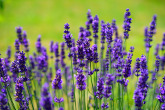
1 Litre Pot £4.99 2 Litre Pot £6.99 Achillea 'King Alfred'A low growing Achillea with silver foliage with sulphur-yellow flowers that appear in spring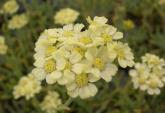
1 Litre Pot £3.99 2 Litre Pot £5.99 Lavender 'Rosea'Fragrant rose pink flower spikes rise on short stems above neat, grey-green foliage. With its pretty pink blooms, Lavandula angustifolia 'Rosea' makes a lovely accompaniment to the traditional purple English Lavenders.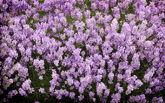
1 Litre Pot £4.99 2 Litre Pot £6.99 Potentilla ‘Golden Starlit’ (Summer)This brilliant yellow flower is perfectly complimented with a grey/green foliage which the bees love. Recommended by the RHS to be an excellent attractant and nectar source for bees and other beneficial insects.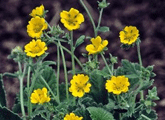
1 Litre Pot £3.99 2 Litre Pot £5.99 Lavender 'Devon Compact White'An ever popular perennial with profusion of pink, slightly more petite flowers on very upright habit over dense, aromatic, grey-green foliage with a tight mounding habit.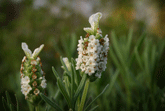
1 Litre Pot £4.99 2 Litre Pot £6.99 Pulmonaria ‘Trevi Fountains’Pulmonaria 'Trevi Fountain'. A spring flowering perennial forming dense clumps of narrow white spotted dark green leaves. The flowers are cobalt-blue with a pinkish cast and long-lasting. One of the earlier flowering lungworts and so particularly valuable as an early nectar source for bees.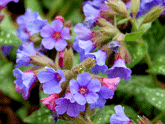
1 Litre Pot £4.79 2 Litre Pot £6.79 Potentilla ‘Scarlet Starlit’A Potentilla that has well-balanced but dwarf habit which carries crimson red flowers in the summer over foliage that has an eye-catching silver lustre. Recommended by the RHS to be an excellent attractant and nectar source for bees and other beneficial insects.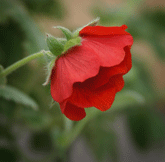
1 Litre Pot £5.50 2 Litre Pot £7.50 Veronica spicata ‘Heidekind’ (Summer)From June-August, each strong stem is topped with a fat, cerise-pink flower which should be deadheaded to extend interest.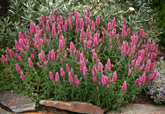
1 Litre Pot £4.95 2 Litre Pot £7.95 Ceratostigma plumbaginoides (Autumn)C. plumbaginoides commonly called hardy blue-flowered leadwort is a low-growing herbaceous perennial with spreading roots, forming a mat of stems bearing oval leaves which turn red or purple in autumn. Clusters of rich blue flowers from late summer adored by bees.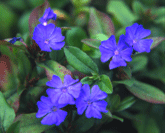
1 Litre Pot £5.49 2 Litre Pot £8.49 Sage officinalis ‘Icterina (Gold)’ (Autumn)A cheerful addition to the herb garden and particularly attractive when topped by its purple-blue flowers in Spring and Summer.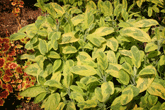
1 Litre Pot £6.50 2 Litre Pot £8.50 Euphorbia ‘Baby Charm’ (Spring)Beautiful red tints to the attractive green foliage, with sprays of delicate green flowers on red stems in spring.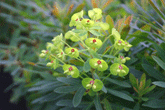
1 Litre Pot £4.79 2 Litre Pot £8.79 Helleborus orientalis hybrid ‘Pink Lady’ (Spring)One of the very best bee plants is the hybrid hellebore (Helleborus x hybridus) because the open flowers are easy to access and provide life sustaining nectar and pollen for at least two weeks or more.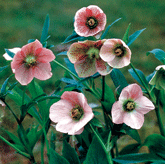
1 Litre Pot £5.20 2 Litre Pot £7.20 Rudbeckia fulgida var. deamii (Summer)Attractive to bees and other pollinators Rudbeckia fulgida var. deamii bears attractive, daisy-like flowers with cone-shaped, black-brown centres from August to October.
1 Litre Pot £4.99 2 Litre Pot £6.99 Geum ‘Totally Tangerine’ (Spring)Tangerine flowers. Loved by bees and ideal for cutting. Flowers May-August.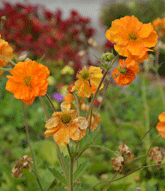
1 Litre Pot £5.79 2 Litre Pot £8.79 Iberis ‘Masterpiece’ (Spring)Iberis 'Masterpiece' is known for attracting bees, butterflies and moths. It has highly nectar-pollen-rich-flowers.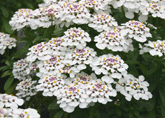
1 Litre Pot £4.99 2 Litre Pot £6.99 |
|||||||||||||||||||||||||||||||