|
|
British National Beehives
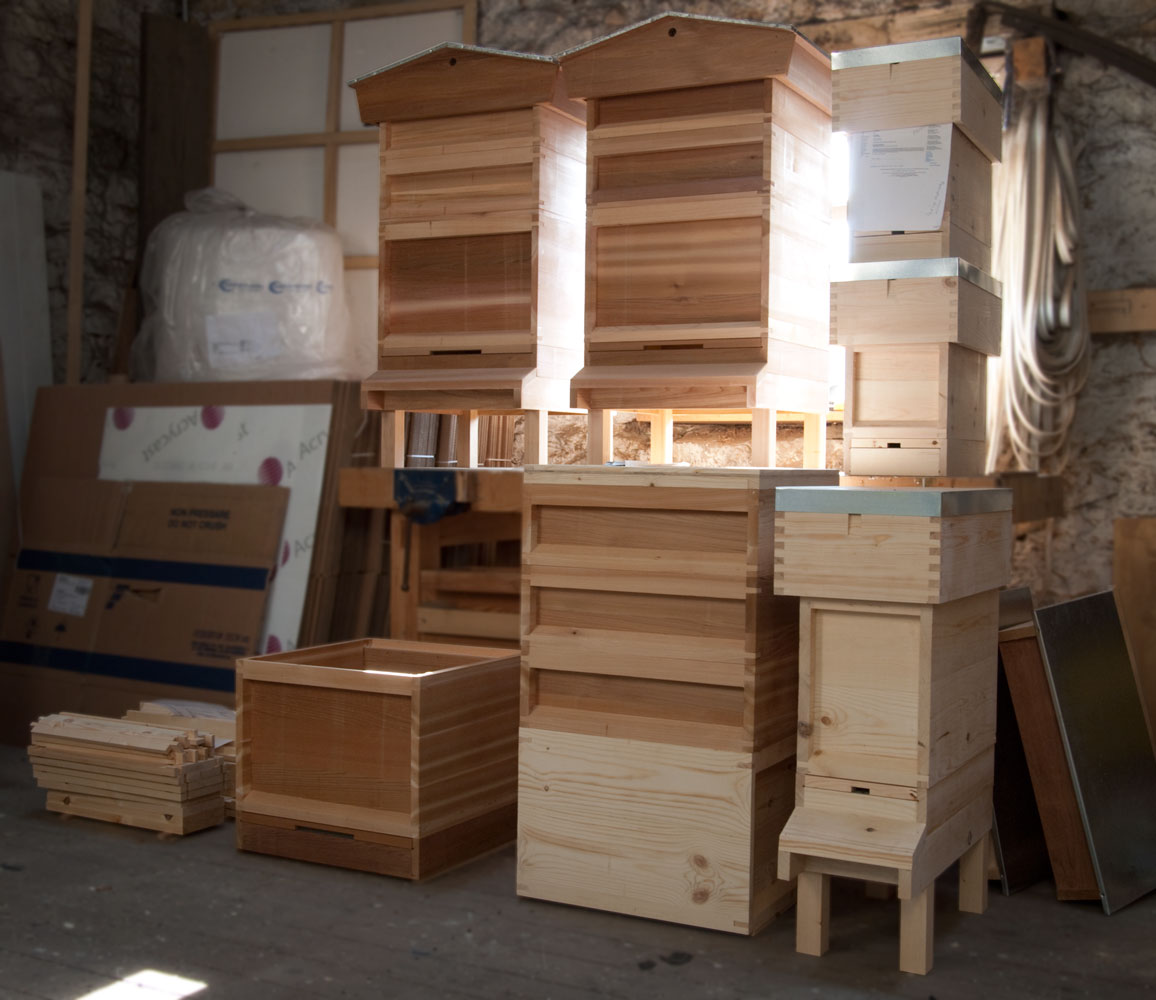
Based in a small workshop in Tideswell in the Peak District we make British National Beehives out of 1st grade Western Red Cedar, high quality Red Deal or, when available, locally sourced Western Red Cedar according to the British Beekeepers Association (BBKA) Modified National Hive Plans. Everything we sell we make here in the Peak District. The driving forces behind peak-hives.co.uk are sustainability and quality workmanship. Sustainability because, well it matters quite a bit we think and quality workmanship because customer satisfaction is paramount.
Holidays 2010
After the hard slog of the 2010 season we'll be taking the first two weeks of August off. Please note that you may continue to place orders and they will be attended to when we return. There are going to be a number of new National Hive related products developed and workshop improvements made during the quieter winter season so keep checking the site for news on these.
Fully Assembled National Hives
Flat Pack National Hives
blog...
The rest of the centre column is (thanks to Wordpress) an ongoing blog of what's new at peak-hives.co.uk and other items of interest...veg garden...renewables etc, but please don't let reading about the allotment distract you from placing your order...:-)
A quick note before I head for the Cedar…news of some planned product improvements and workflow/customer service.
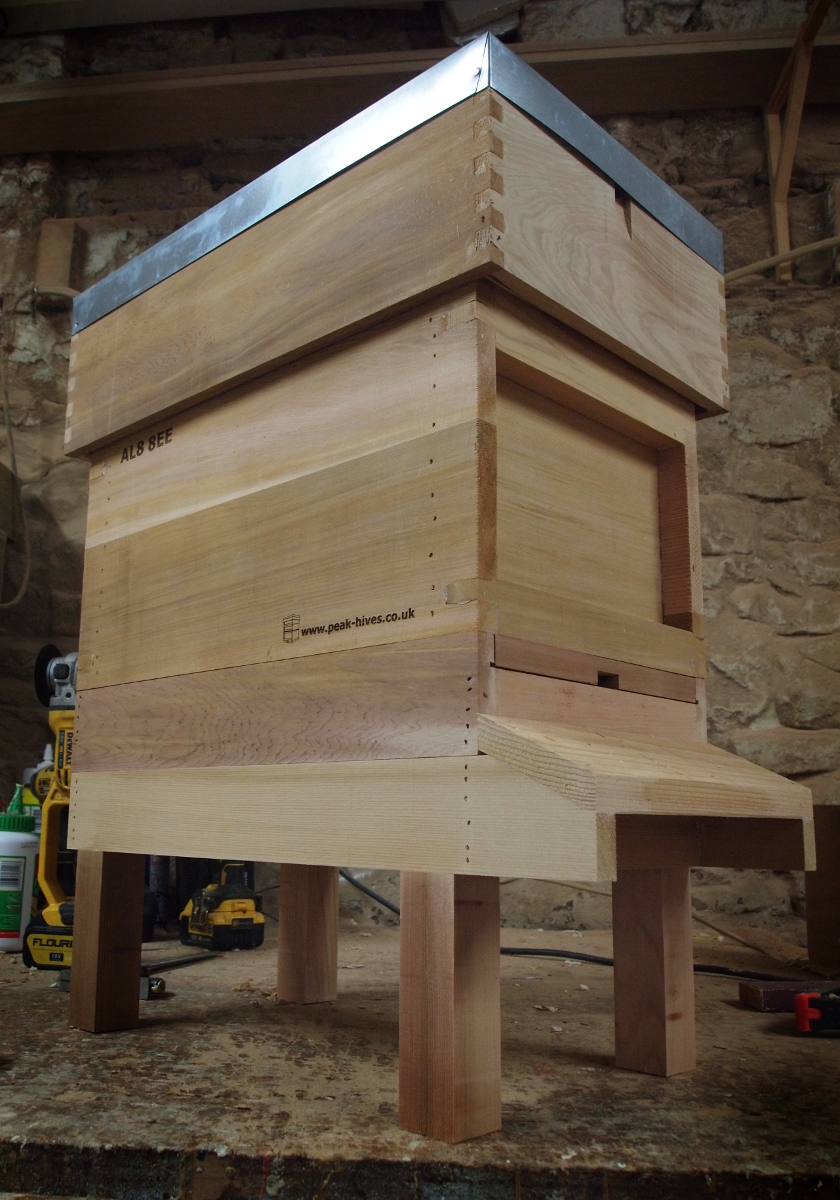
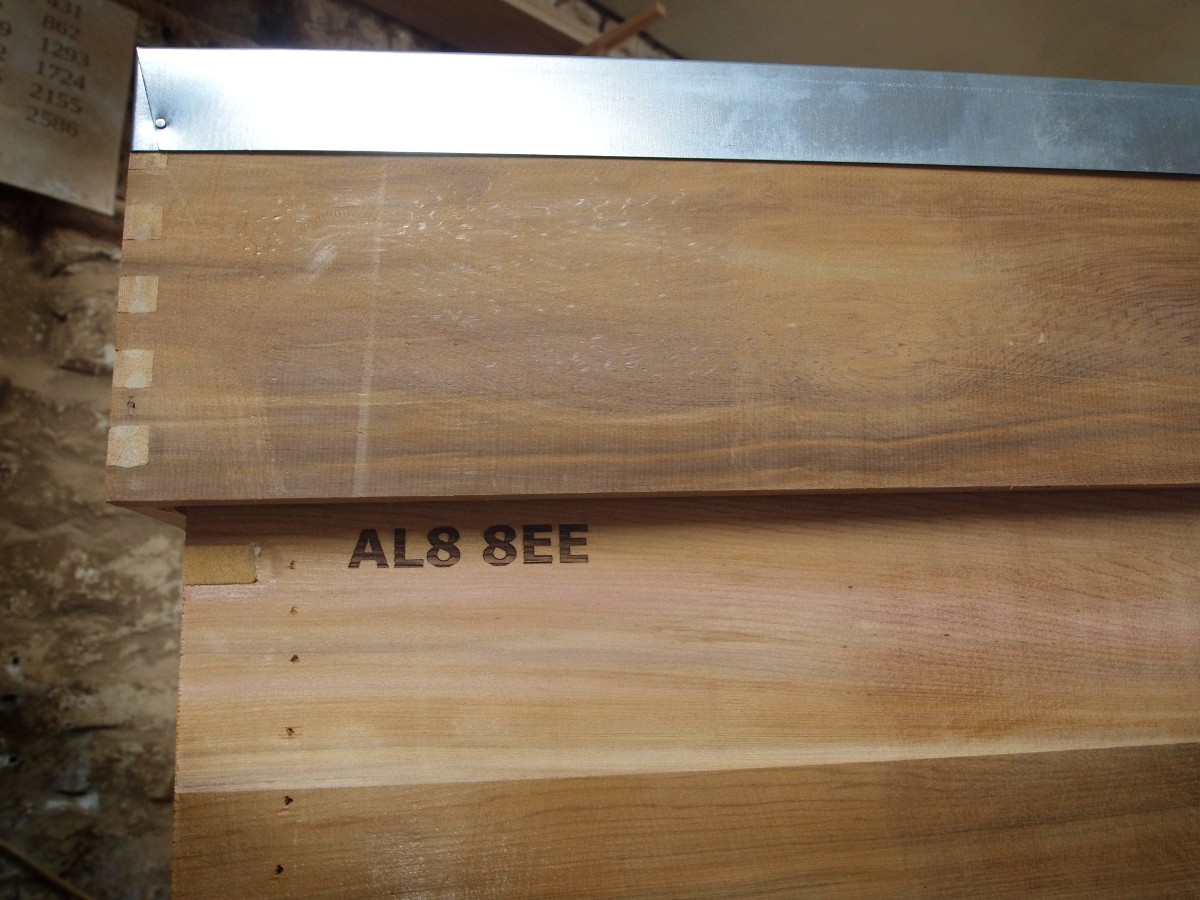
First of all I’m having a branding iron made for Peak Hives. It will allow me to brand all Peak Hives assembled products both inside and out with a unique serial number should the client request it. There’s been quite a few hive thefts in Derbyshire (see latest Beecraft) and as bees and hives come to the fore and increase more and more in value I think putting an indelible unique identifier on each hive is a good idea. The serial number will be the customers ‘PHXXXXXX’ order number which is unique to each customer and it can be burned into the timber as the hive is assembled so I can do it both inside and out in places that would make removal very difficult indeed whilst not affecting detrimentally the look of the hive.
Following on from that I’ve decided to implement a calendar widget on the Peak Hives web page where customers can check where their order is in the queue. We are a cottage industry striving for sustainability and mass production isn’t what Peak Hives is about. But we are a business and keeping customers happy is core to any business. The idea is that for every order received there will be a ‘PHXXXXXX’ serial number generated which would be sent to the customer. This would then be placed on a frequently updated calendar visible on the main page. The customer could then easily check where their order was in the queue and have peace of mind as to when it would be finished and despatched. There’s a bit of programming to do on the page so it won’t be done until this current busy period is over but it should be a helpful improvement in future.
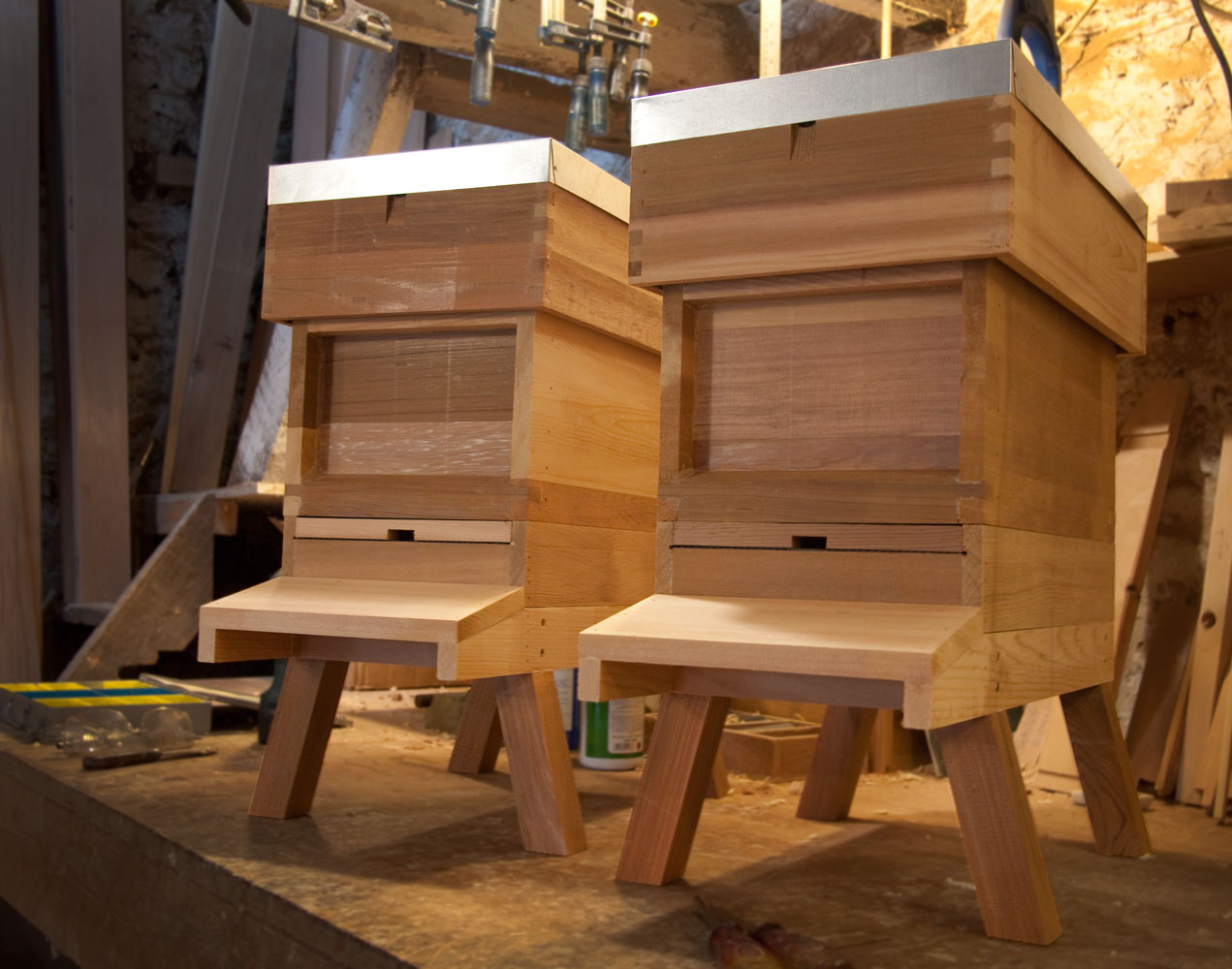
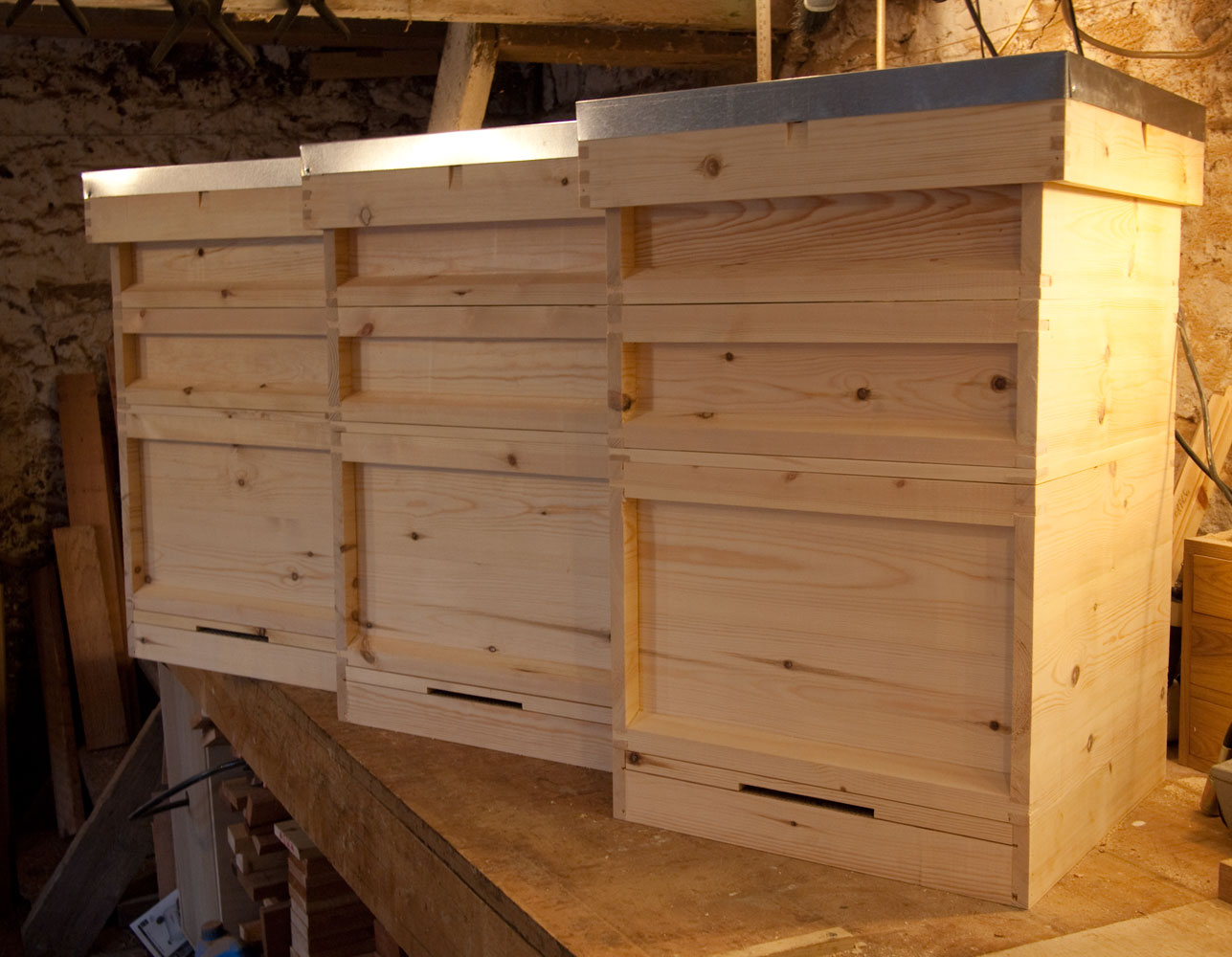
Finally, I always like to put up some visuals so here’s a piccy of a couple of National Hives that recently left the workshop…
 Standard National Hives from Peak Hives
The weather’s turned a bit unpleasant here in the Peak and due to my swarm control activities I have a new nucleus colony. I’ve decided to feed them up and made up a pair of Ashforth Feeders, one for a full size National Hive and one for my 5 frame Nucleus Hives. I tried the plastic contact feeders that most of the other suppliers sell and having been warned by experienced beeks that they were rubbish I can confirm from my own experience that they’re right. They are rubbish. I’ve decided to opt for the Ashforth as the best feeder. The other option would be the Miller but according to other beeks they are not as good as they require your hive to be perfectly level (and I know mine aren’t).
They are made of First Grade Cedar and have a bee space underneath to allow the bees maximum access to the syrup. The full size feeder can easily accomodate 10 litres of syrup and the nucleus size around 5 litres. I’ll be adding them as Peak Hives products as soon as the broadband arrives at the new house.
 Ashforth Feeders
After dedicating myself to getting up at 5am and finishing in the workshop at 11pm for the last week I’ve finally finished Matthew’s 23 fully assembled Cedar National Hives. That’s 23 National Hive Stands, 23 Varroa Floors, 23 National Brood Boxes, 46 National Supers, 23 Framed and Wired Queen Excluders, 23 Crown Boards with Porter Bee Escapes, 23 National Hive Gabled Roofs and a partridge in a pear tree.
Here’s a piccy of Matthew (and Alexandra, one of mine) who runs Honey Bees At Home just about cramming it all in to a long wheel base Mercedes Sprinter Van. Many thanks to Matthew and all the best with Honey Bees At Home!
I am well and truly knackered but will be making up orders again tomorrow first thing…it’s a good job I love my workshop.
 23 Assembled Hives!
Into the house next to the workshop!
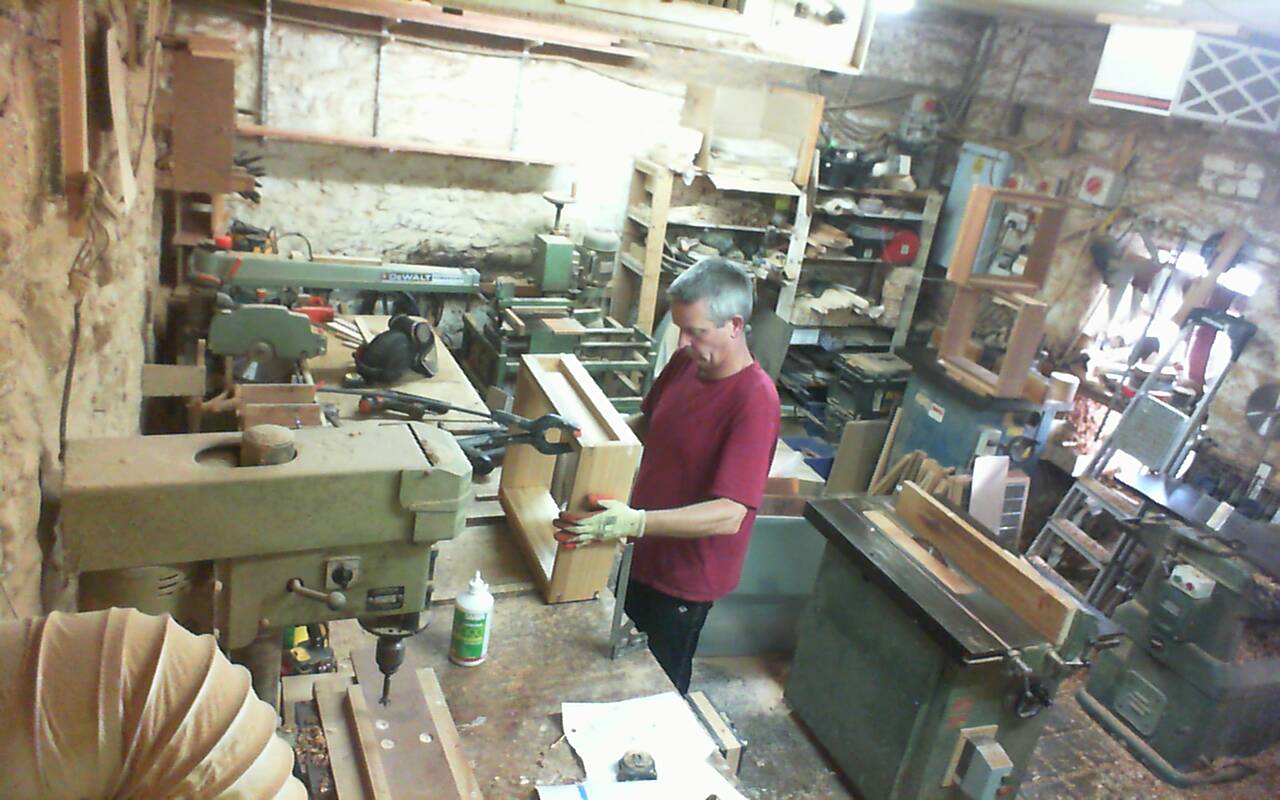
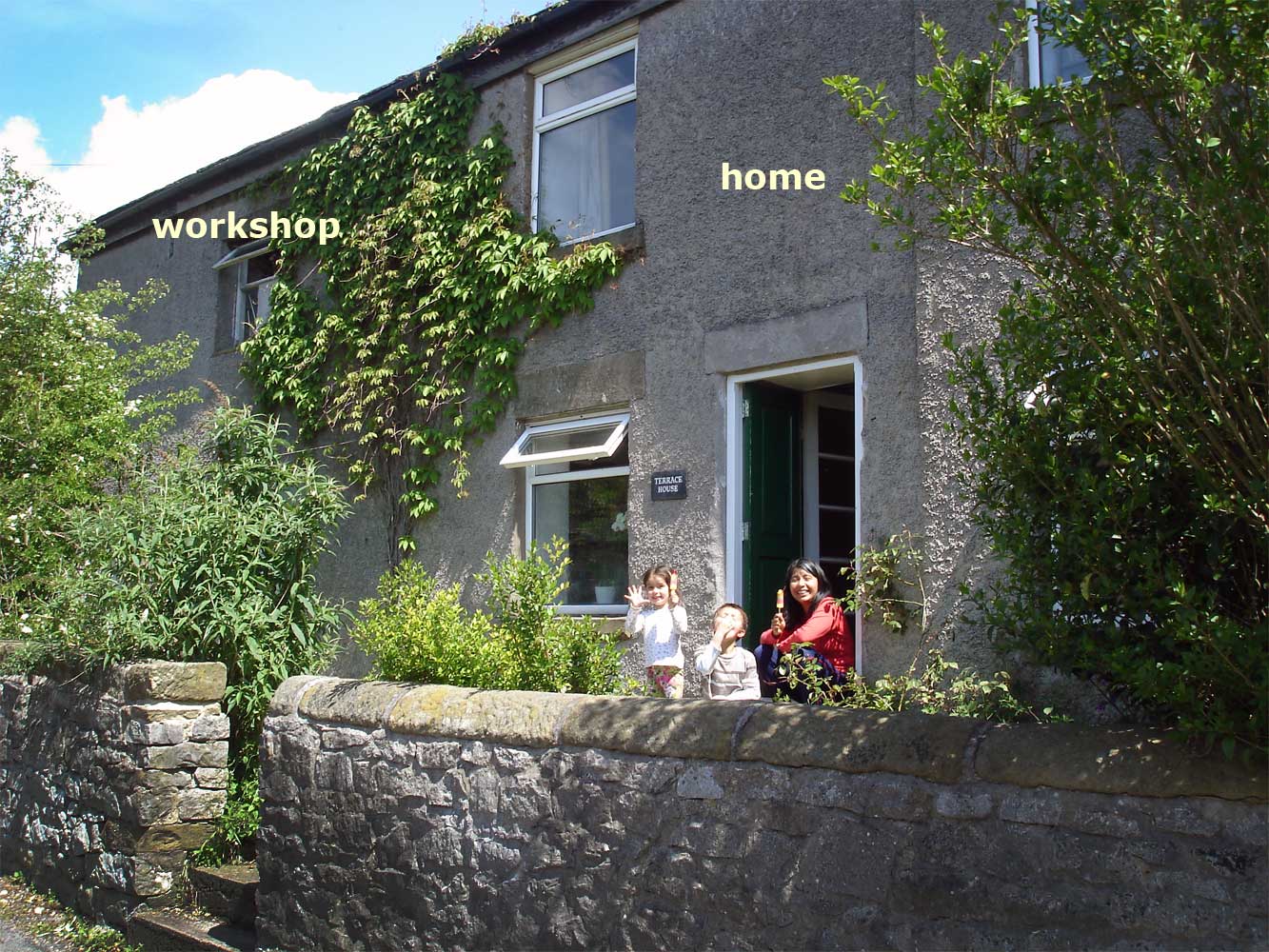
Partly due to workloads and also the need for a better place for my own brood we decided to move into the house next to the workshop. Peak Hives customers will be pleased to hear that this allows me to get into work at around 6am and leave around 10pm…has to be done but I’m not sure how long I can keep it up. I’m currently awaiting a broadband connection which is due on the 10th of June. One that’s in then my plan is to install a Peak Hives Workshop Webcam so that clients can see their National Hive being machined and assembled. The move will also allow me to develop new National Hive related products when I have a bit of spare time…watch this space. First on the list is going to be Ashforth feeders for both full sized hives and nucleus hives as my own recent experience suggests that the contact feeders are rubbish.
 Working from Home
There’s nothing worse than woodworking for leaving you with egg on your face. It happens in even the very best cabinet makers. Just as this standard National Hive floor was about to leave the workshop to be sent out to the customer I decided to lay the tape measure across it and lo and behold it was 8mm short in one dimension! The workshop air didn’t quite turn blue but I did sigh with relief that I wasn’t going to get a call in a couple of days asking why my National Hive floors were different sizes to everyone elses.
 oops!
The only solution was to quickly make up another as the rest of the order was ready for delivery.
To err is human.
Whilst the locally sourced timber is sticked and stacked in the now nice and dry spring weather I’ve been conducting a little experiment in timber drying. I cut a piece of the Chatsworth Cedar to the dimensions of a National Hive top or bottom rail and I’ve been taking photos of how it’s gone on weight wise inside a centrally heated house…the difference is dramatic to say the least. From a whopping 372 grammes and feeling like a truncheon it’s now a mere 145 grammes and feeling like a piece of balsa wood. It’s incredibly light. Part of the reason why hives are made out of cedar is that it’s light but the reason why it’s light is because there are lots of air pockets in the timber which gives it another potentially useful property. It’s a good insulator. Nice warm bees in nice light and comfy cedar hives…
 Drying Western Red Cedar
Every now and again I go to the lumber stack and ‘heft’ a piece of the Chatsworth cedar and I can feel it getting lighter in weight almost day by day.
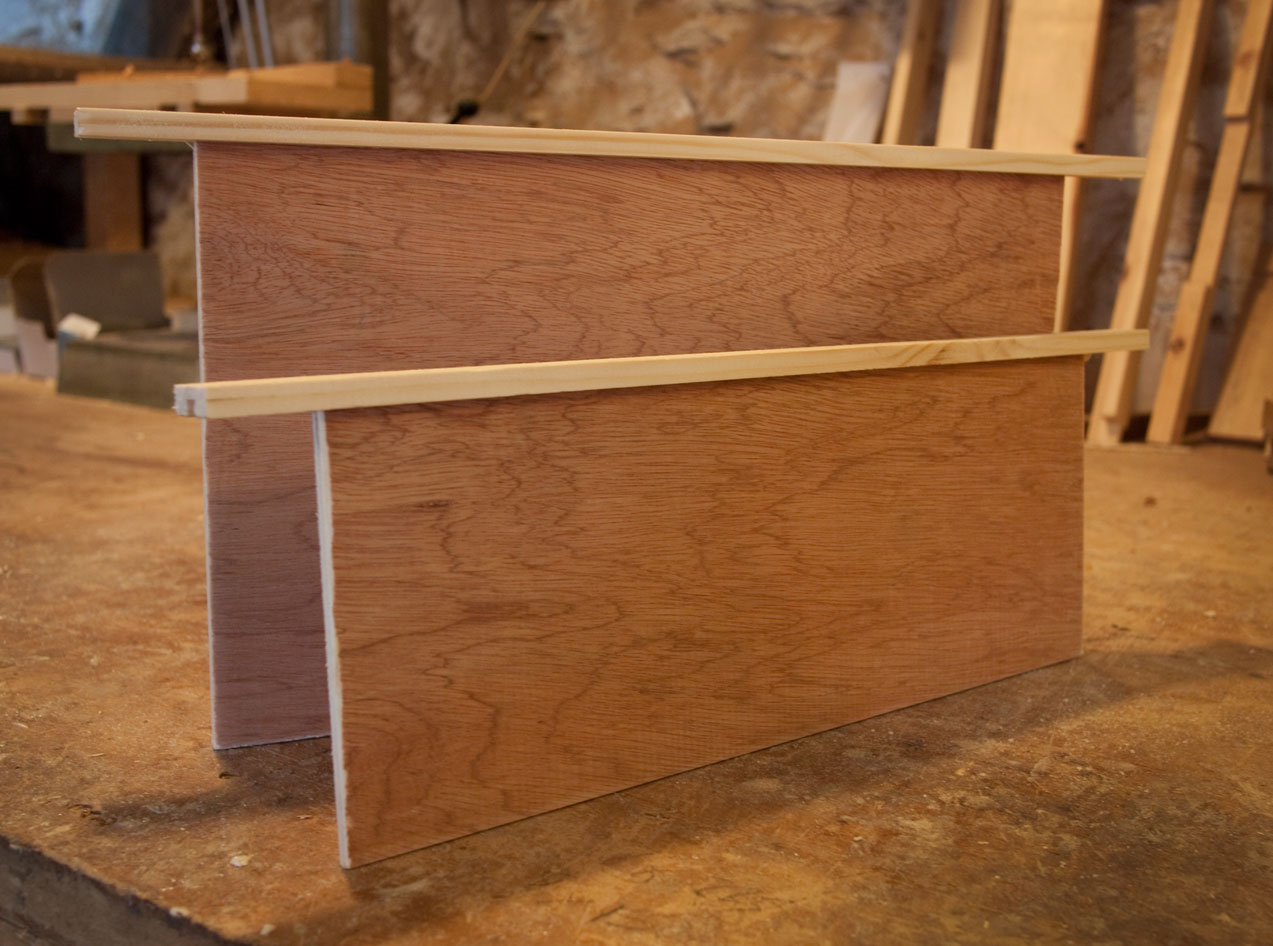
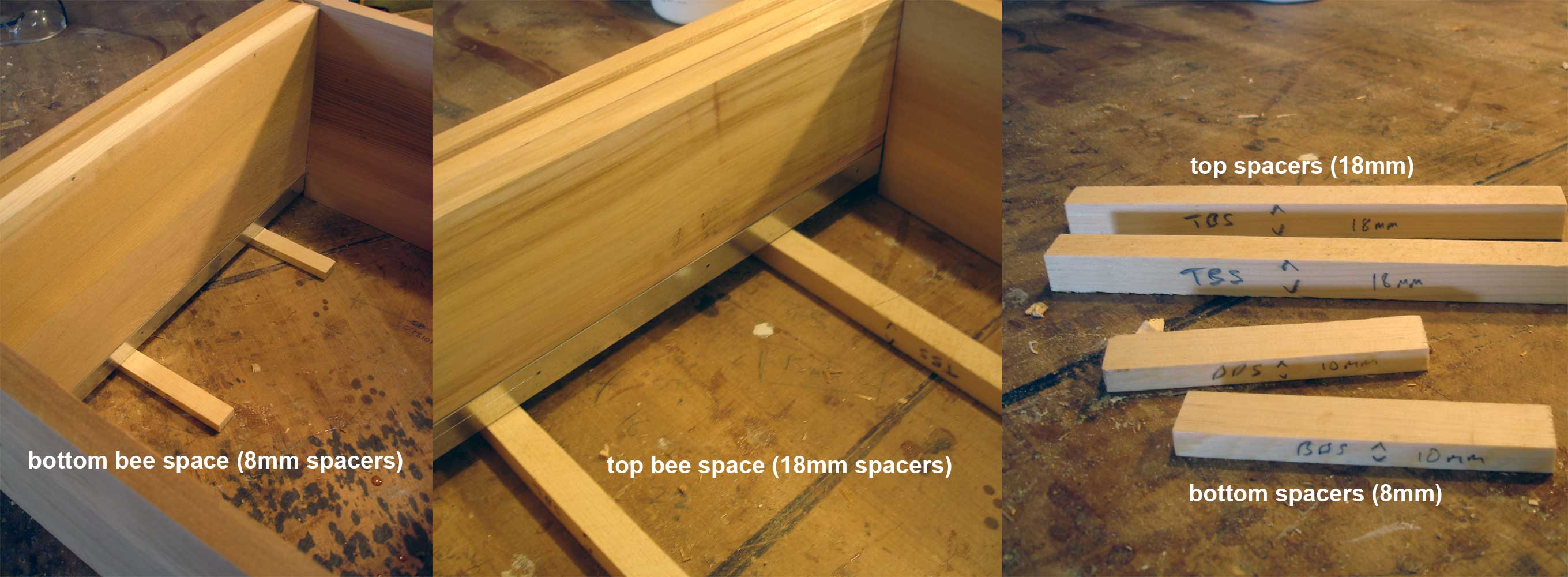
Hi. Answering a few queries I’ve had about fitting metalwork to National Hive Brood Boxes and Supers here’s a quick and simple guide to correctly fitting metal rails to the woodwork. The image is more or less self explanatory but the essence of the procedure is to turn the brood/super upside down and place some sized bits of timber (10mm for bottom bee space and 18mm for top bee space) under the metal runner to give the correct gap. The metal runner just rests on top of the wooden spacers while you pin it into place. Once done you are guaranteed the correct chosen bee space.
 Bee Space Spacers
Time to squeeze in an allotment update…
Spring is finally here in the Peak District so here’s a photo (panorama of four photos stitched together) of where I’m currently up to.
Lots of red onions because my partner Adriana is from Peru and they’re used widely in Peruvian cooking. A new area for soft fruit (Blackcurrants, more Rhubarb, Autumn and Summer Raspberries, Redcurrants, various varieties of Gooseberries and more…) replacing a nettle patch that discouraged the family from venturing down to do some weeding/fettling.
Prior to this year the plot had been one area with treaded down paths every 4 feet or so and nettles all round. I was given some weatherproof boards back end of last year and slowly started making up the raised beds in the picture.
On the far right there’s one high raised bed which will be followed by three more of which two will be given to the kids to grow what they will and two will be used for root veg or spuds.
 Amor Mio!
The panorama is perhaps a future bees eye view as I’ve taken the photos from where I’m planning on putting my two Apis Mellifera Mellifera colonies that I have coming in a few weeks.
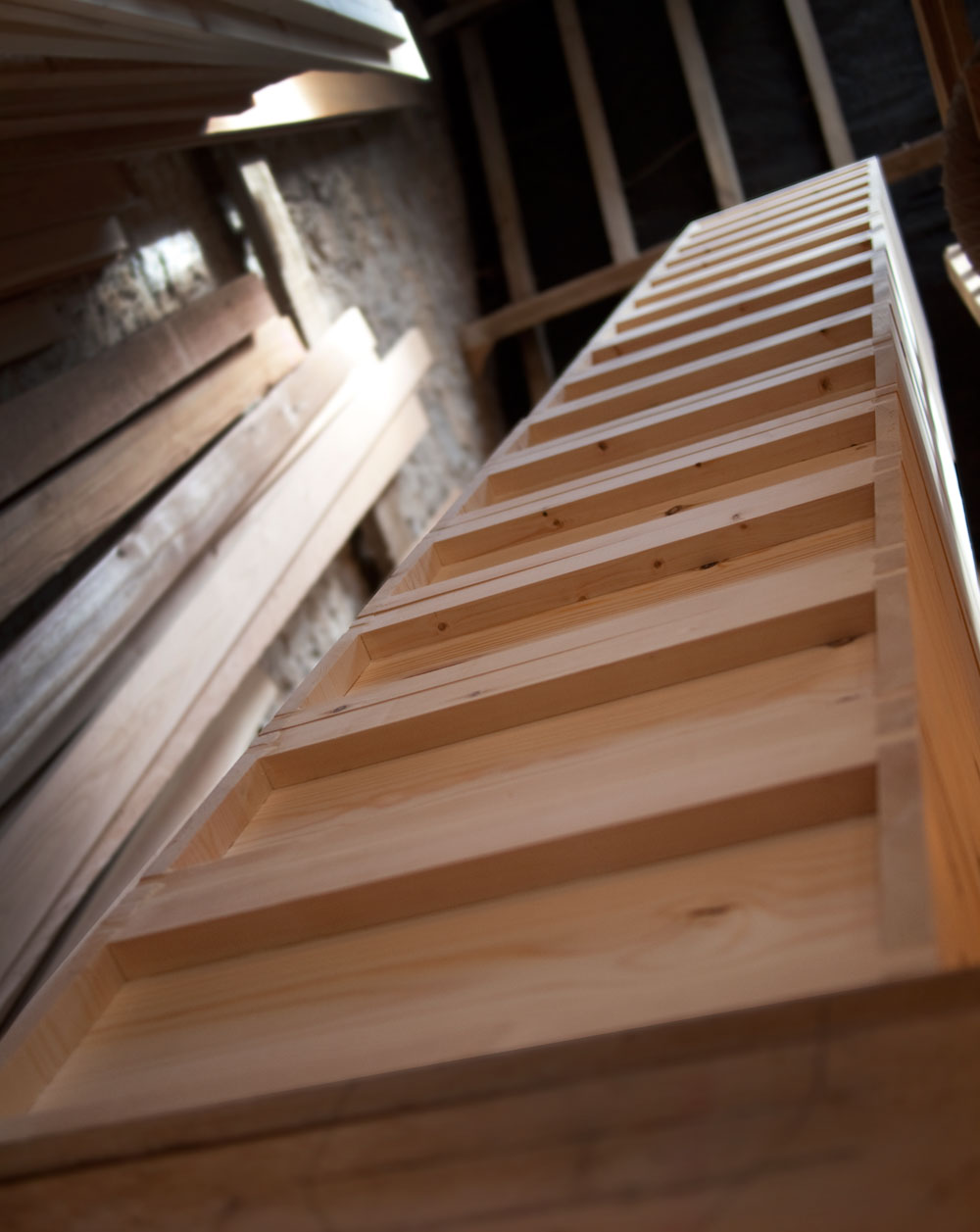
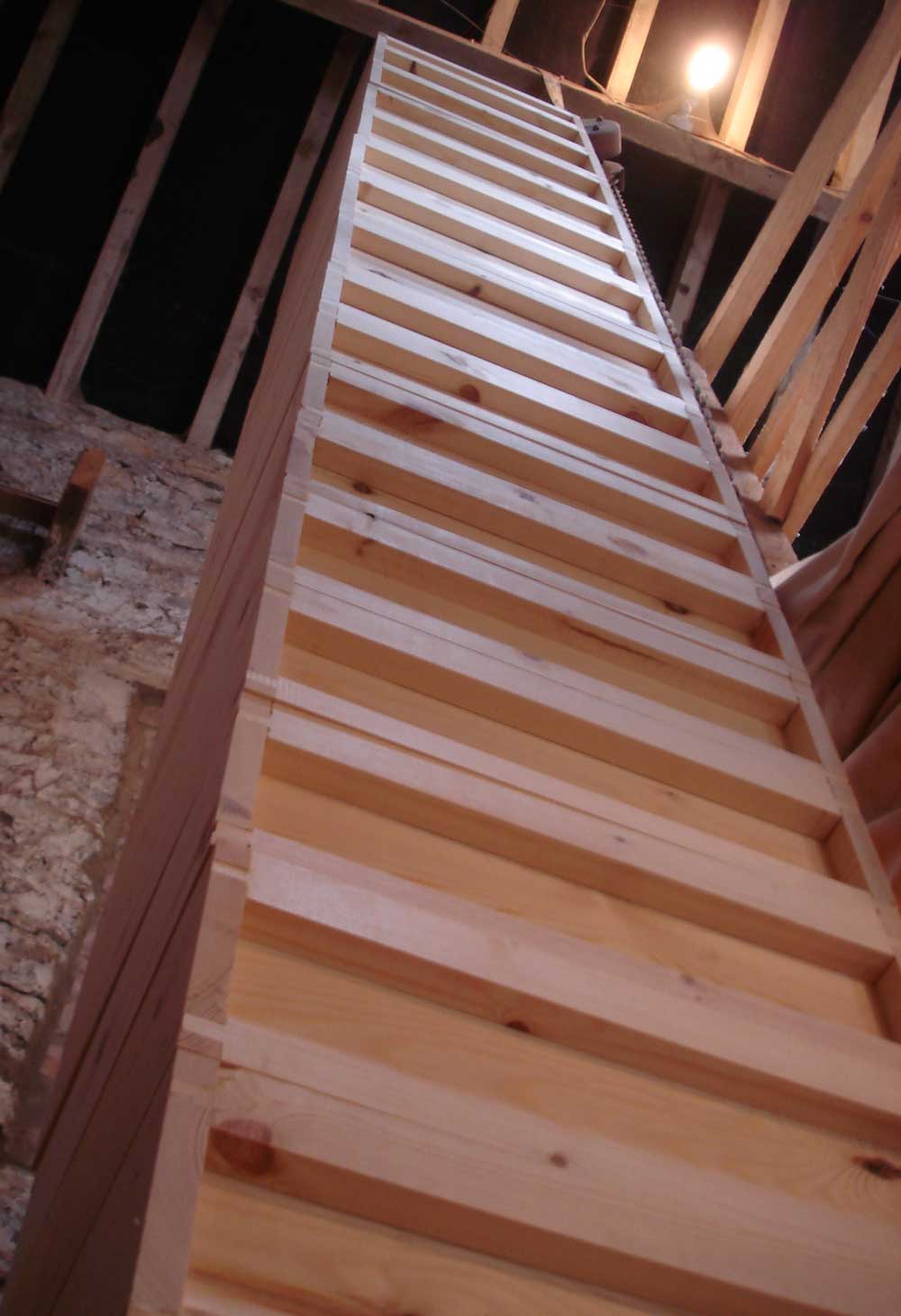
With the order book so full I decided to work through the Easter weekend. By Monday I had a stack of Red Deal National Supers reaching up to the rafters of the workshop!
 National Hive Super Stack
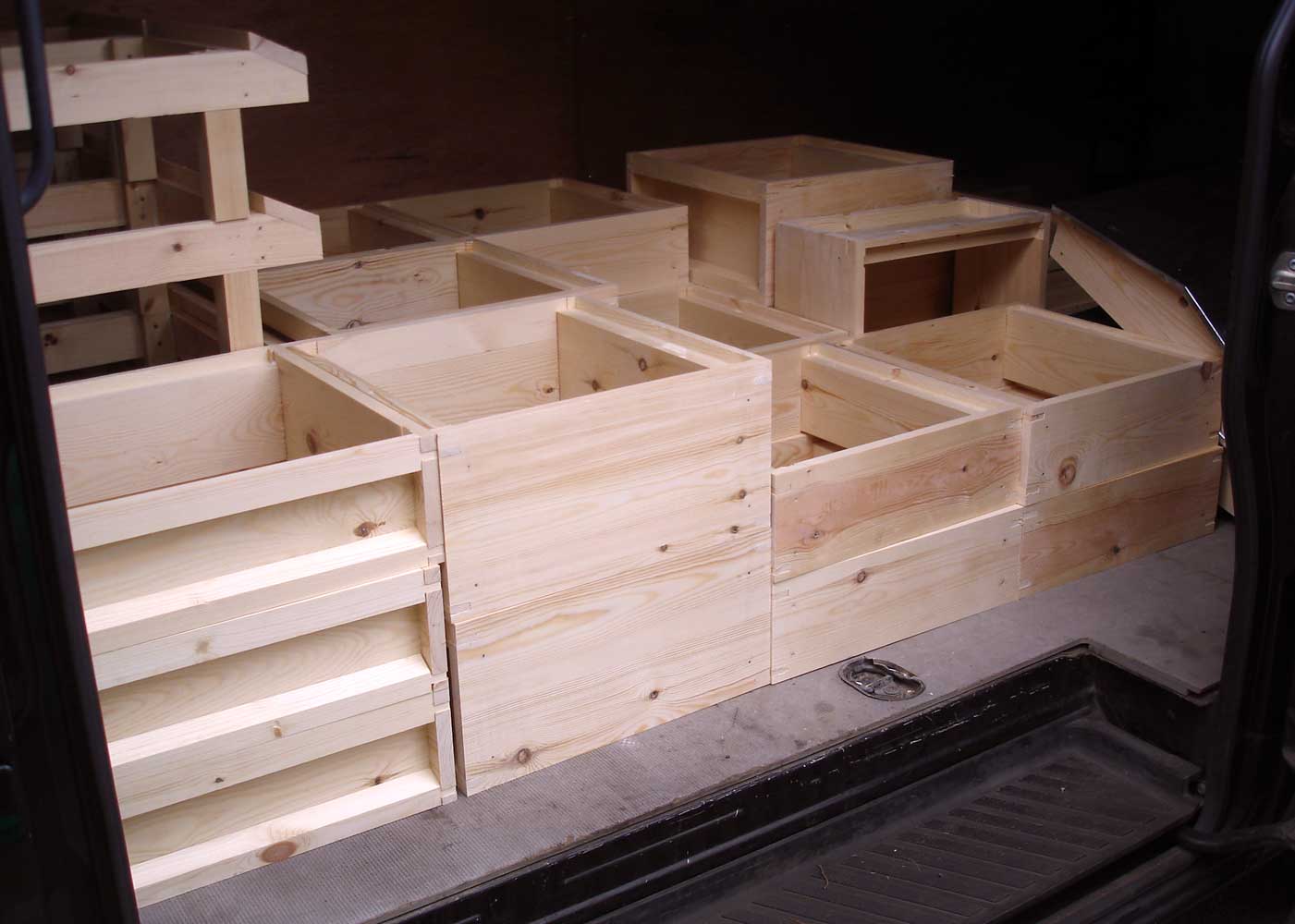
Completely cleaned me out of Red Deal. There’s more being delivered on Thursday and luckily I’ve a good stack of cedar to work on in the meantime. It’s a good thing that Andy came up with a transit van to pick up at lunchtime today otherwise I’d have struggled for room in the workshop.
 Van Full of National Hives
Once he’d taken away this large order I managed to squeeze out a couple of Nucleus Hives by close of play. Phew! Friday is holiday! My boy James is doing very well at school and as a reward the lot of us are off to Alton Towers Water Park. I suspect that Saturday may bring more workshop time for this blogger but I’m going to allow myself a little R and R and enjoy Friday!
Had a busy and tiring day felling two Western Red Cedar trees with tree surgeons Paul and Dan. The trees had to come down anyway as they were about to topple the chimney stack on the house they were next to. Once they were down I sliced them into National Hive sized logs and then as soon as possible it’s down to Simon at Rowsley Sawmill where they’ll be milled into 2″ boards ready for air drying this summer.
 Peak District Western Red Cedar
Here at Peak Hives we’re very keen to obtain locally sourced materials if at all possible and many thanks to Dave for giving the heads up on the trees and to Paul and Dan for letting me come along on the day. Can’t wait to get one of Peak Hives National Beehives made up out of Peak District Cedar.
Local tree surgeon Paul has contacted me with regard to a couple of Western Red Cedars that he has to fell. They need to come down anyway as they are threatening the buildings nearby. He’s been very helpful and positive about these trees being used for National Hives rather than just burning them as firewood and is in negotiation with the owners now to see if it’s possible to do a deal on their unwanted trees.
 Peak District Western Red Cedar
Many thanks to Paul!
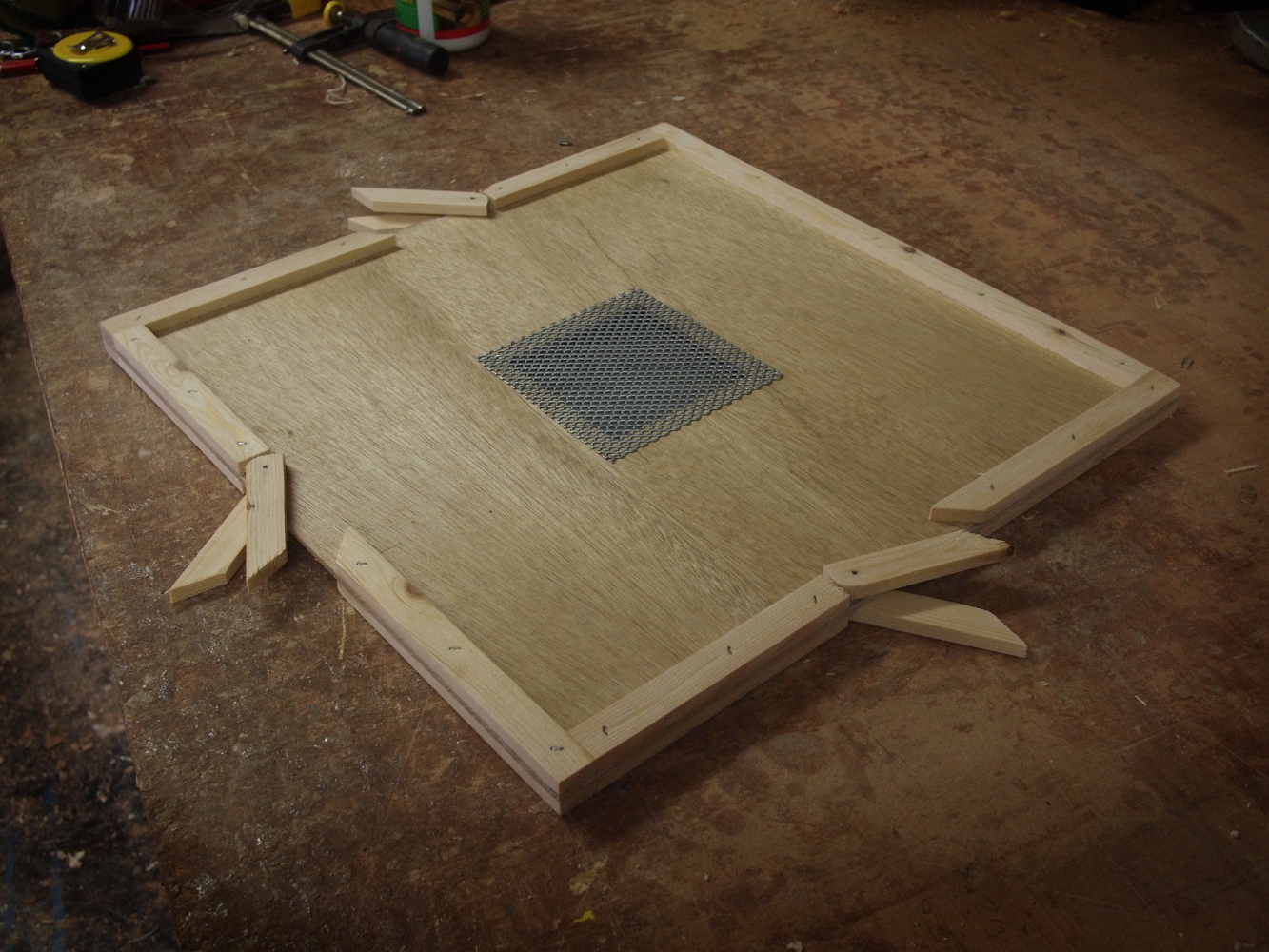
Peak Hives are now producing framed and wired queen excluders suitable for National Hives with either top or bottom bee space. Our metalwork supplier sent us the metal grills a few weeks back and I’ve just had the chance to set up the workshop jigs to produce high quality frames to go round the excluder grill. As with all our other National Hive seperates they can be found in the hive parts section in the left hand column. I’ll also add them as an option on purchasing a complete hive this evening.
 Framed Wired Queen Excluder
My metalwork supplier has recently sent me a batch of high quality queen excluder grills. The mission before me (…’should I choose to take it’. R.I.P. a fond childhood memory – Peter Graves) was to come up with a frame suitable for both top and bottom bee space. To tell the truth they’ve been sitting on the shelf for a couple of weeks now irritating the hell out of me that an obvious solution wasn’t immediately at hand. The National Hive order that I’m currently working on includes a couple of excluders so in the end I bit the bullet and spent a couple of dead (£££) hours ‘uhmming and aahing’ and making up various workshop jigs. By five o’clock PM with the help of the new Startrite Pillar Drill I’d got this far…
 Making Queen Excluders
By six I’d cracked it and I’ll make up the two for the order in the morning and tomorrow evening have them on the site as a Peak Hives product.
Happy beekeeping 2010. Nick
Hi. I’m always on the lookout for new machines and I came across this Startrite Mercury Pillar Drill. There’s not much to be done with one of these for making National Hives but seeing as I had been coping with a much inferior machine bought from B&Q or a.n.other vendor of rubbish machinery I jumped at the chance. The new machine is 3 phase and very good at what it’s supposed to do…the old is single phase and rubbish…easy to see which is the better machine.
 Startrite Mercury
The first batch of locally sourced Chatsworth Western Red Cedar has been milled up by Simon at Rowsley Sawmill and I’ve just stacked and ‘sticked’ it to air dry. Simon’s milled it into 2″ waney edge boards which I can then machine up into either national hive rails or slice down the middle for hive ends/sides. Kiln drying would be too expensive so we’ll stick it cover it to protect it from the rain and wait…
 Air Drying Chatworth Western Red Cedar
I’ve had quite a few requests to produce top bee space national hives. Got an order finished this morning so just before my lunchbreak I decided to ‘jig up’ for offering top bee space nationals. Basically the difference in machining requires the production of a deeper top rail for supers and brood boxes and a suitable mortice in the brood/super sides to accommodate the deeper rails. Anyway to cut a not very long story shorter here’s a couple of pics showing the standard British National Hive option of bottom bee space and the new optional top bee space…
 Bottom Bee Space National Hive
 Top Bee Space National Hive
I’ve also put together a little page on the debate between top and bottom bee space…here
I’ll update the site to allow choosing top bee space as an option later tonight.
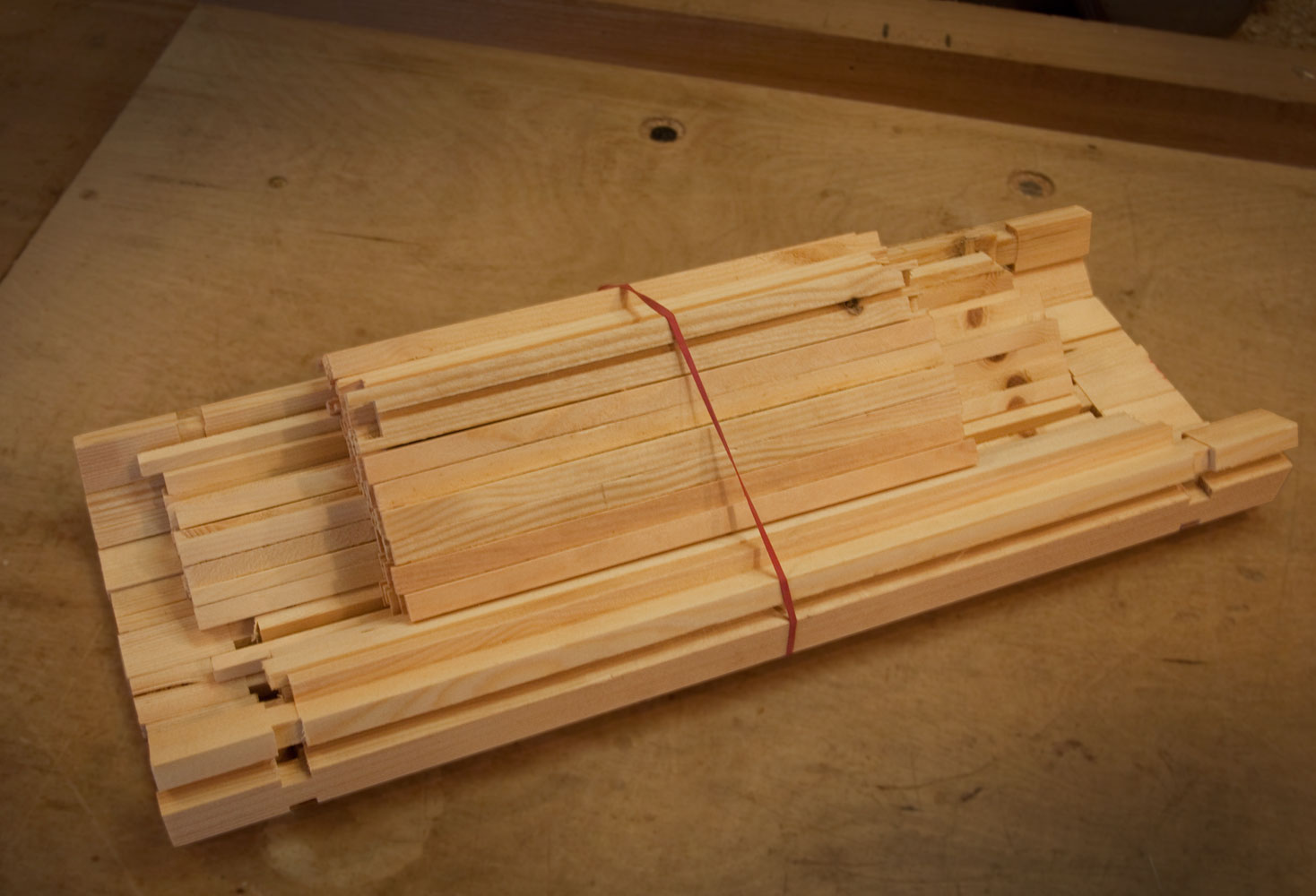
Hi. Rich came up on Wednesday to the Peak Hives workshop and picked up his flat packed national hives. Was good to see him again and Steve who came along too. Rich is an experienced beekeeper so by agreement (and the fact that they wouldn’t fit into his car otherwise) I didn’t seperate them out into individual units.
Here’s the kit he took…
 Rich's Hives
I’m getting plenty of enquiries about making up batches of frames and will endeavour to have a go this weekend (I do have to make a special meal for the oldies though on Saturday as it’s their golden wedding anniversary). The other thing that I need to respond to is enquiries about ‘top bee space’ national hives. It’s technically sorted but I want to have a go at machining some up before offering it as an option. Coming soon, probably tomorrow.
Allotment news is that I made some space this afternoon for another fruit tree in the garden…it’s getting tight on space and I’ve another two trees to plant. I wonder if the farmer who owns the field across the road would mind.
All the best and as usual, happy beekeeping 2010!
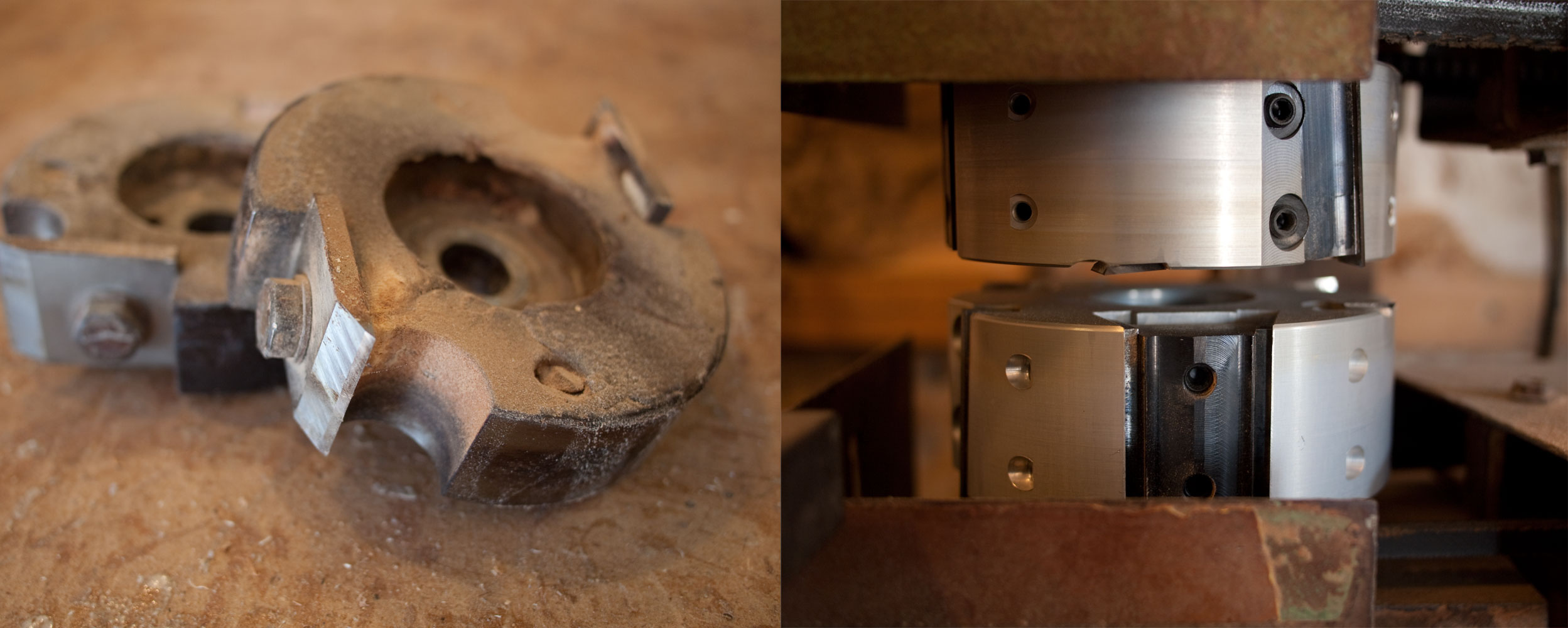
A quick post to show a detailed view of our lock joints on a standard national hive roof. Originally I was using a dovetail jig but thought it was worth while investing in the required tooling to make the roofs as per the specification laid down by the British Beekeepers Association Modified National Hive plans which are the mainstay of all Peak Hives products. I’m hoping to find some time in the next couple of weeks to make up a few observation hives…those dratted orders keep getting in the way though.
Happy beekeeping 2010!
 Lock Jointed National Hive Roof
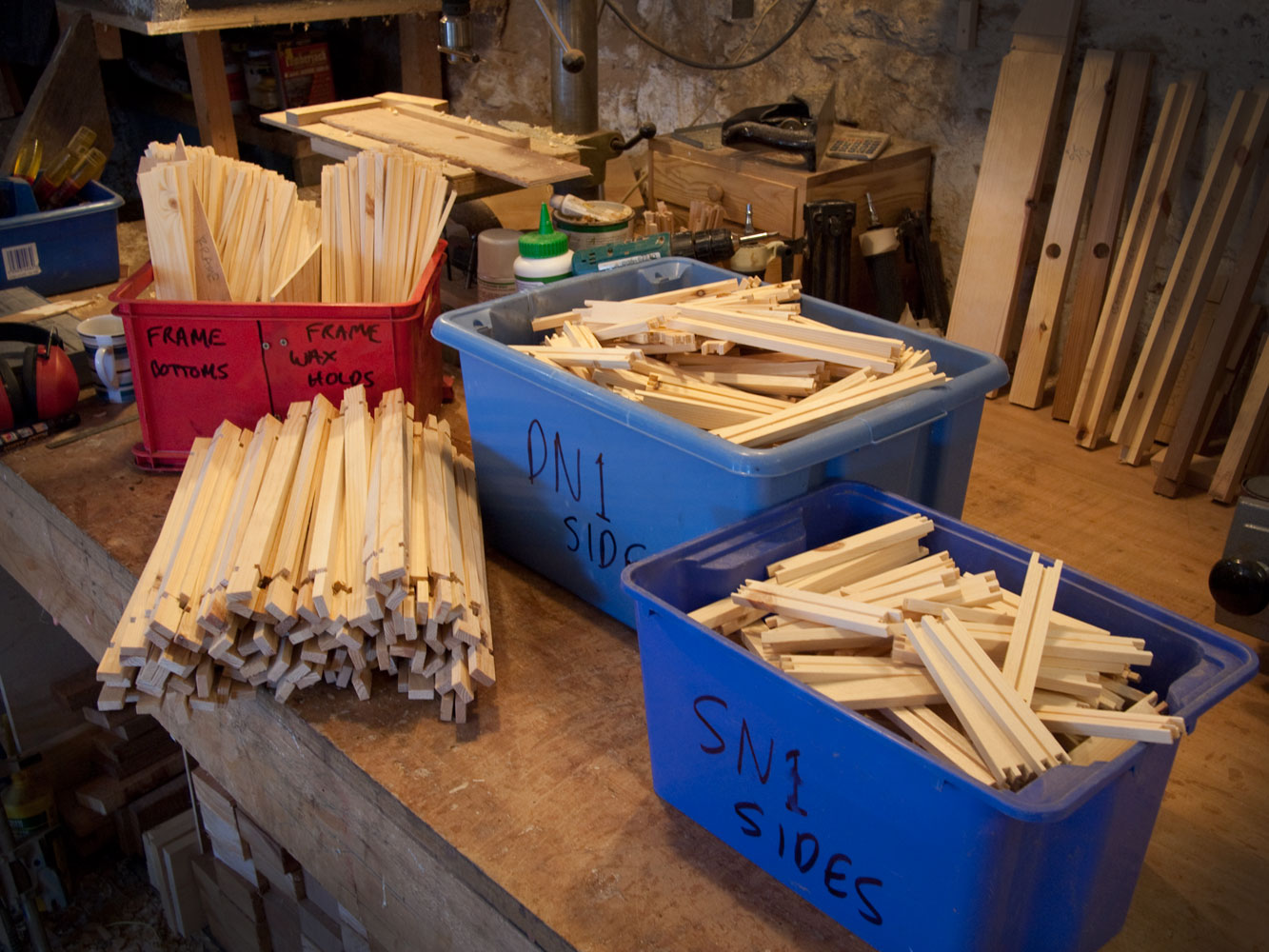
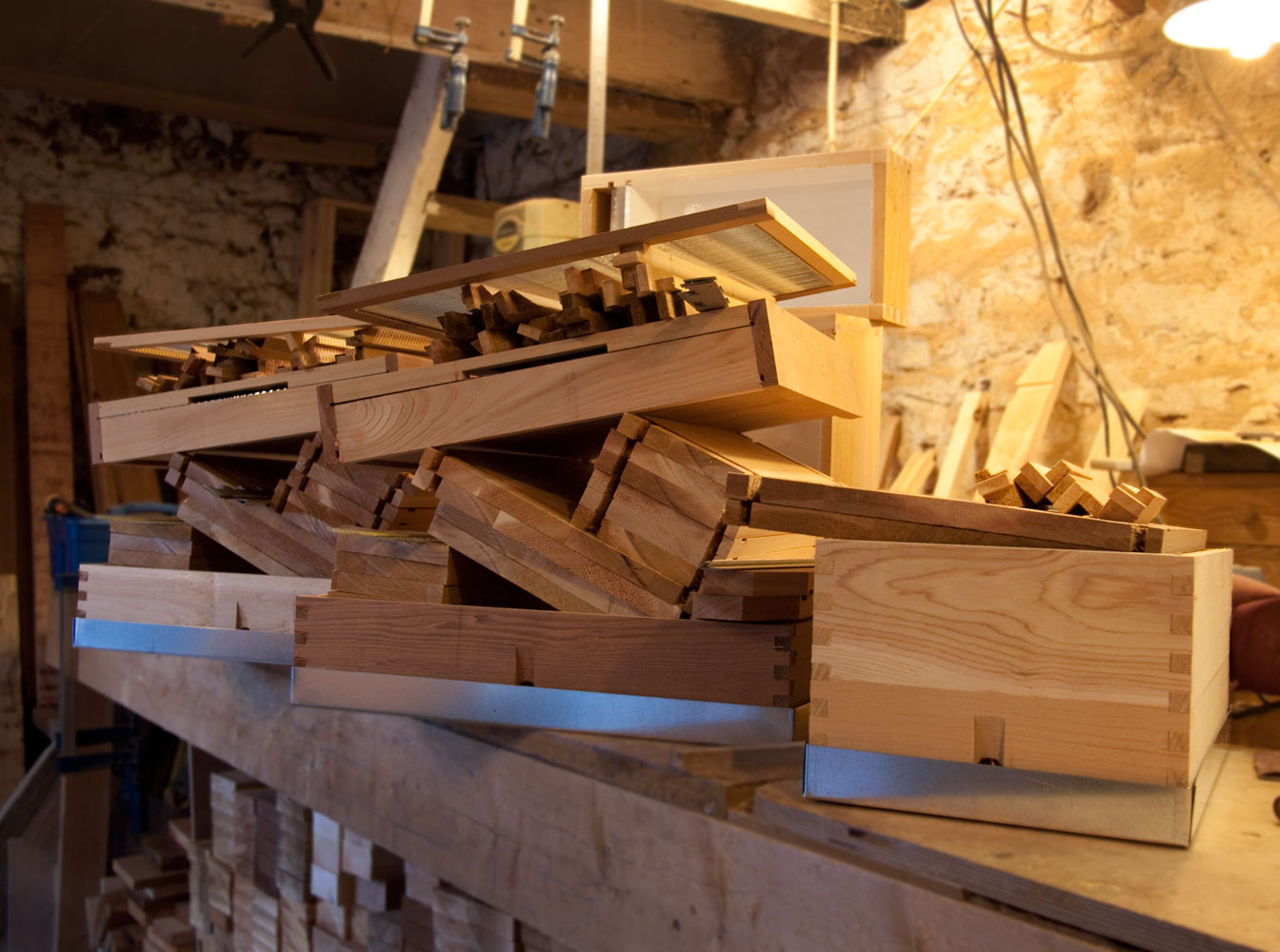
Hi. I thought it might be informative to show the workshop (or the ground floor machining area at least). This is where all our national hives are made. Upstairs there’s an assembly area and shelving for hive parts. As you can see it’s an old building which in it’s time has been a cow shed, a hen shed, a joiner’s workshop, an electricians workshop (The whole of Tideswell was electrified from here), an artists studio, a joiner’s workshop again and now peak-hives.
The image is several shots stitched together using ‘hugin’.
All the best and happy beekeeping for 2010!
 Peak Hives Workshop
I’ve just updated the prices/availability regarding the National Hive Gabled Roofs reflecting the fact that we’ve decided not to do them any more in flat pack. The reason is that the roof structure with the top finishing piece is, I think, a weakness (given that its the most exposed part of a hive) and it’s better to have a single one-piece metal roof cover which, thanks to Swift Engineering of Buxton, we can now provide. It means it’s not feasible to send them out as flat pack as the metalwork will get spoiled in transit.
We want you to get the best use out of our products for many seasons and this decision was made to ensure that’s the case.
My own view is that for practical beekeeping the flat roof might be the better solution as you can turn it upside down and put supers on it etc but I understand the desire for the aesthetics that the gabled roof provides.
Feedback, as always, is very welcome.
All the best. Nick
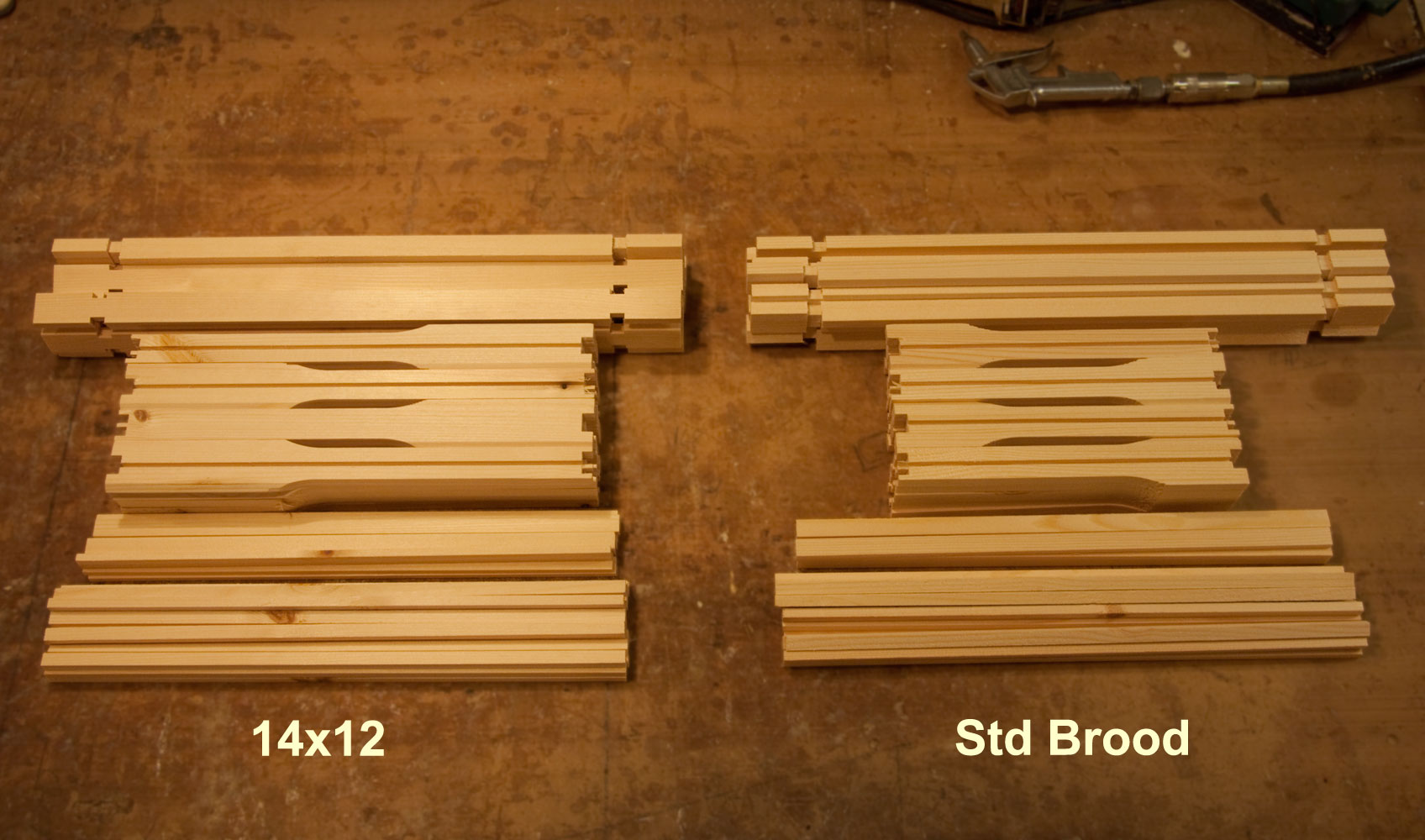
Just working on orders and there’s a couple of 14×12 nucs in there in red deal so I’m making up a batch of 5. Here’s the brood chamber dry assembled. Back to the workshop now to start on the roofs.
 14x12 nucleus hive
Our Wadkin BAOS, my favourite machine, died the other day as the wormwheel on the thicknessing feed motor lost it’s thread. Fortunately there are plenty of these machines about and you can still buy spares from places like Advanced Machinery. Very good company to deal with!!!
Here’s the BAOS on it’s side hanging from a block and tackle whilst I effected the repair. Remarkable how much weight can be packed into a smallish machine. Took all day (sorry if it’s put your order back) but by the end of the day my fav machine was doing the business again and had been oiled up and greased to boot. Now tomorrow has to be back to production and building up stock of British National Hive parts.
 Wadkin BAOS under repair
As a quick break from making up a batch of national nucleus hives today I had the chance to test out my new gear for making lock joints for national roofs. previously I’d been using dovetails (which are perfectly suitable and in my opinion in some ways better) but given that all the big boys use lock joints I felt it necessary to follow suit and so here’s the test pic on a couple of bits of scrap western red cedar…
 testing a lock joint for national hive roof construction
it’s twenty to twelve at night and I’ve just got back from the workshop…covered in grease and mess from trying to resuscitate a machine. tomorrow’s national hive making is going to be pushed back while I try to get the part needed for my Wadkin BAO/S planer thicknesser. If all else fails then I’ll use the older machine that we have in the workshop (thanks to neil) to do the thicknessing but the BAO/S will still need that part and it’s a matter of sourcing it without being stung (no pun intended) for too much cash by the parts dealers.
ugh! 2009 has been an ‘interesting‘ year. roll on 2010!
Another listing for a national hive super on ebay….here
Arrived today. One pricey blade! A quick break from making up orders and stock to perform a test with the new blade. Cuts like a dream. Finishes as if it’s been through a planer. The cut width is a tiny 1.7mm!! This will certainly do the trick of getting the maximum number of National Hive frames out of the timber used. I’ll be making up a batch of frames next week probably starting with DN4 Hoffman’s to be supplied with our brood boxes or sold as flat packs.
 Thin Kerf Blade used for making National Hive Frames
Not sure how M and T are doing but we’re snowed under with orders. Initially I was working on a just in time ordering system. That’s been binned as I can see that if I don’t have stocked shelves of National Hive parts then I won’t be able to cope. So every order that comes in now is being made up but doubled…one for the customer and one for the shelves…
I’m also fretting about delivery times…Adriana is taking charge of running the business as regards that so I shouldn’t be so concerned given that she’s a background in managing businesses very sucessfully…
worries gone? not quite but almost…
Cheers and here’s to a good beekeeping 2010!
Nick
We’ve just purchased some tooling to improve upon our National Hive Roof design. Now roofs will be constructed using 1/2″ lock joints. Frames wise I decided that it was worth investing in a thin kerf saw blade for our table saw. Each cut will only waste 1.7mm instead of the usual 3.2mm. When machining up lots and lots of little parts (ie. frame bits) it will be much more economical if each rip through the timber only consumes 1.7mm….that’s the theory anyway and it’s backed up by me getting the plastic out to pay for an expensive saw blade…
We hope your bees will be happy in our hives and would welcome feedback in the new season…photos or comments please and we’ll set up a gallery area on the site.
All the best
Nick
here’s the first of perhaps many thousand…a quick bit of jig making and we’re producing Hoffman DN4 frames. More tests to do but the initial test was today and if we can make the Hoffman self spacing frame then the others shouldn’t be a problem. if you’ve a request for a frame type then please mail me.
 DN4 Hoffman Frame for National Hive
Paul (from Oxfordshire Beekeepers) came up today to pick up 11 Flat Pack Western Red Cedar National Hives comprising standard floor with entrance block, standard brood box, 2 supers in red deal and a 4″ roof with galvanised metal cover. It’s turning into a production line…
 flat pack national hives lined up for collection
here at Peak-Hives we take hive making seriously. whether it be ripping and planing timber down to size, tenoning top and bottom rails, putting just the right bevel onto bottom rails, morticing out our national brood box and super ends everything is done with precision and care. In the picture you can see 6 well used items from the workshop…getting things square is as you can see very important and that was the main idea behind the photo…but up in the top left you can see the other little tool that has edged it’s way into the shot and deserves a mention…without that calculator there’d have been many a costly mistake it has to be said…trusty little fella has aided me many a time…
 squares and calculator used in national hive making
|
To Order You can purchase everything for a National Hive here on a single page. If you're looking at buying a complete hive then please use the center column...for National Hive parts please use the left hand column.
You can view your order at any time here...
If you have any problems ordering please call nicholas on 07594 583 151. Most hives / hive parts are available from stock but please remember that our priorities are quality and sustainability and not making a fast buck out of mass produced items.
You can also contact me at nicholas@peak-hives.co.uk
If you have a large order (eg 10 plus hives) then discounts will be available. Please call to discuss.
Delivery/Collection
If you're within pickup distance then we welcome collection in person direct from our workshop in Tideswell. Otherwise UK mainland delivery charges are as follows:
£0.01 to £99.99 = £9.99
£100 to 199.99 = £7.99
over £200.00 = free delivery
If your order is to ship to Northern Ireland, The Channel Islands, Republic of Ireland or the Highlands and Islands please add extra postage by clicking this button...
Holiday 2010
We will be taking the first two weeks of August as holidays this year. Whilst we're away please feel free to place orders which will be attended to as soon as we return from a well earned rest.
We have a large number of orders on our books already so please bear in mind that any orders received from 5th July onwards are likely to be made up after we return.
Delivery Update
Peak Hives is, and will remain, a small cottage industry and our products are made to order. Due to the huge interest in beekeeping we are very busy at the moment. If you have a time critical order then please call Nick on 07594 583 151 and I will always try my best to accommodate your needs. The current turn around on orders is approximately 3-4 weeks.
Testimonials "...The quality looks really good, and I am looking forward to assembling the first one to see how they look."
"...really gratifying to know that there are still craftspeople in this world who can turn out high quality products, use sustainable business practices and materials, still charge an accessible price and deal with customers in a friendly manner..."
"...thanks for the hive its gone together well and is now waiting for its bees!"
"...arrived this morning, very nice, I am well pleased with it."
"...Just to say thanks for you effort to get the bee hive to us. The brother-in-law is a happy fellow..."
"...were easy to assemble and all functioning...The quality of timber is also so much better than other ones I've had..."
"...Nuc’s just arrived. Many thanks for getting it out to me before the weekend. It looks really good, can’t wait to put it together so I can split my colony and put it to some good use..."
|